How Does Food Impact Brain Health
Written By: Karina Fernandez-Saito and Rhea Mittal
Doctors advise pregnant individuals to maintain certain food habits. An embryo requires adequate amounts of fats and proteins for its development. The necessary molecules provided from foods during pregnancy also help to insulate nerve cells known as myelin sheaths. These protective layers are essential for sending and receiving signals throughout the nervous system. Without the intake of correct nutrients and antioxidants, electrical insulators are prevented from properly developing for bodily communication. An article from Scientific American describes brain food as fuel for the mind and body to perform to their greatest potential. As humans grow and mature, what we consume is a large part of our lives.
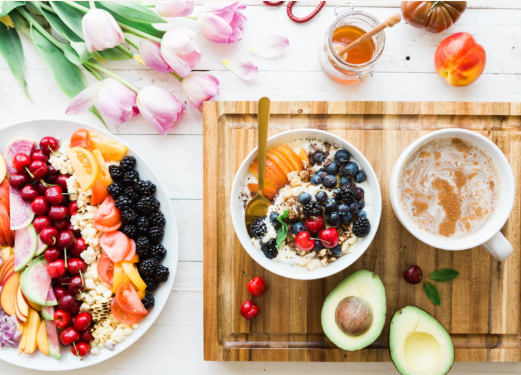
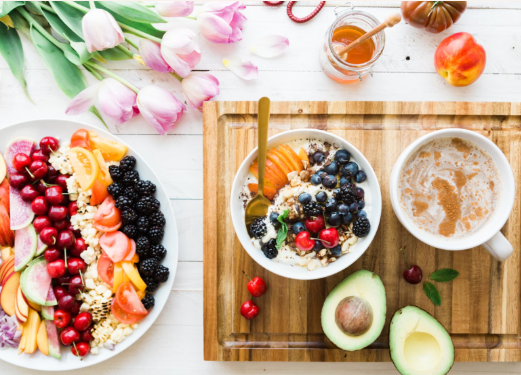
The human body absorbs the most energy from protein, followed by carbohydrates, then lastly, fats. Fats expend a lot of power to be converted into energy. The body will not want to break down fat molecules, as it would much rather break down carbohydrates for biological processes, such as aerobic respiration. Choosing to consume unsaturated fats such as olive oil, as opposed to overly processed saturated fats, still promotes a healthy and delicious diet. Fatty fish, like salmon, contain high amounts of omega-3 fatty acids. Some other forms of omega-3 fatty acids include different types of seeds, like flaxseed. Omega-3 fatty acids are vital polyunsaturated fats and could lower your risk of cardiovascular disease and limit the chances of inflammation in the body. Unsaturated fats “support heart health when used in moderation” and are located in higher concentrations in the eyes and the brain. According to Harvard Medical School, foods that are excellent for the brain, and specifically for memory, include walnuts, berries, coffee, and tea (Harvard Health Publishing, 2024). Obtaining the necessary nutrients, vitamins, and antioxidants directly from the foods you eat can limit oxidative stress from producing within the body. According to the Cleveland Clinic, oxidative stress refers to “an imbalance of free radicals and antioxidants in your body that leads to cell damage” (Cleveland Clinic). The consistent manifestation of oxidative stress could lead to many harmful illnesses, most especially neurological diseases, including Alzheimer's disease. Free radicals are not inherently bad for the body, as they are a necessary component for the immune system and other bodily functions. However, an excessive amount of free radicals, formed as a byproduct of breaking down foods into energy, can be potentially harmful. They put other healthy molecules at risk since they possess the ability to steal electrons to stabilize their own incomplete amount of electrons. Fear not, antioxidants help reduce the amount of free radicals floating around by donating one of their electrons. The top twenty antioxidants that are abundant in foods we consume daily, provided by the United States Department of Agriculture, include legumes, berries, apples, and dark leafy greens (St. Johns Health). All the foods previously mentioned help with brain health and mental functions, such as memory and decreased inflammation. A major chemical known as serotonin is involved in various behaviors such as managing sleep, appetite, memory, and much more. Serotonin also prevents inflammation within the nervous system (Harvard Health Publishing). This neurotransmitter is produced by the brainstem but is primarily produced in the gastrointestinal (GI) tract since the lining of the stomach consists of nervous cells. It improves absorption of nutrients from foods you eat, and most importantly, they “activate neural pathways that travel directly between the gut and the brain” (Harvard Health Publishing). Maintaining a diet that is beneficial for your mental and physical health is vital to seizing your daily life. Luckily, the consumption of brain food could greatly improve your nervous system and overall health.
References:
Cleveland Clinic. “What Is Oxidative Stress?” Cleveland Clinic, 29 Feb. 2024, my.clevelandclinic.org/health/articles/oxidative-stress.
Gómez-Pinilla, Fernando. “Brain Nature reviews. Neuroscience vol. 9,7 (2008): 568-78. doi:10.1038/nrn2421
James Stubbs, R et al. “Diet composition and energy intake in humans.” Philosophical transactions of the Royal Society of London. Series B, Biological sciences vol. 378,1888 (2023): 20220449. doi:10.1098/rstb.2022.0449
Kiefer, Ingrid. “Brain Food.” Scientific American, Oct. 2007, www.scientificamerican.com/article/brain-food/. Accessed 28 July 2025.
Reilly, Christopher. Top 20 Foods High in Antioxidants.
Selhub, Eva. “Nutritional Harvard Health Blog, Harvard Health Publishing, 18 Sept. 2022, www.health.harvard.edu/blog/nutritional-psychiatry-your-brain-on-food-201511168626.