
Everyday Habits for Maintaining a Healthy Metabolism
Written By: Sahannah Seemungal and Ihsaan Alam
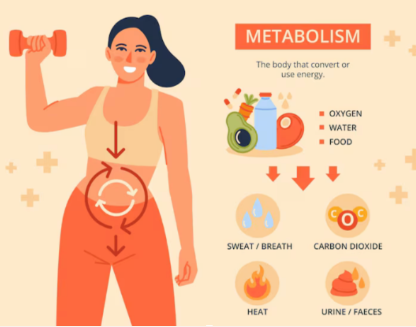
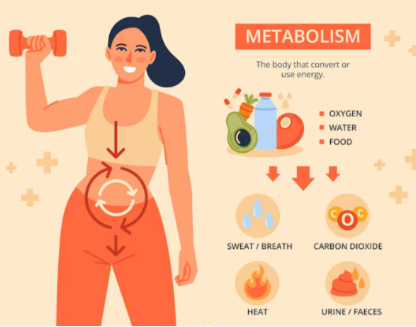
Metabolism is the process by which our bodies convert food and drink into the energy needed for all bodily functions. It involves continuous chemical processes within cells that allow essential activities such as breathing, movement, healing, and overall bodily maintenance. Metabolism intensity varies among individuals, with genetics being the key factor in determining how fast or slow it runs.
Both basal metabolic rate (BMR) and resting metabolic rate (RMR) measure how many calories the body needs to function. BMR reflects the minimum calories required for vital activities such as blood circulation, digestion, and maintaining body temperature, while RMR includes the energy used during rest and light daily activities like eating or walking short distances.
Even though genetics play a role, age and lifestyle also affect metabolism. As we age, it tends to slow down, even if it was fast once, especially as a kid. A slower metabolism burns fewer calories more efficiently. Even so, metabolism alone isn’t to blame for weight gain as poor diet and lack of physical activity are often the main factors.
Many people try to speed up their metabolism by dieting or cutting out calories too drastically. Some even skip meals because they claim they don’t have enough time to eat, not realizing that this habit can actually slow down their metabolism. When calorie consumption drops too low, the body interprets it as a sign of starvation and lowers its BMR to conserve energy. To maintain a healthy metabolism rate, whether you are trying to lose weight or not, it is important to focus on eating smarter. For example, choosing nutritious foods rich in lean protein, like chicken, fish, beans, and Greek yogurt, and unrefined carbohydrates such as fruits, vegetables, brown rice, and legumes.
Additionally, eating smaller, balanced meals throughout the day helps prevent excessive hunger and overeating. Try to limit high-sugar and high-fat snacks, which are more likely to be stored as fat. Also, avoid highly processed foods and irregular eating patterns, as these both can disrupt metabolic balance.
Even though you can’t drastically change your resting metabolism, building muscle can make a difference. Muscle tissue burns more energy than fat, even at rest. This is because the more lean muscle mass you have, the higher your RMR will be. A greater RMR means that your body is burning more calories throughout the day, even when you’re not actively exercising. Strength training increases lean muscle mass, while aerobic activity such as brisk walking, cycling, or running helps burn calories and keep your metabolism active. Even just 25 to 30 minutes of walking most days of the week can help.
Another important factor is sleep. Getting seven to nine hours of sleep each night helps regulate the hormones that control hunger and metabolism, such as leptin and ghrelin. Sleep deprivation throws these hormones off balance, making you crave processed foods and feel more tired. Poor sleeping patterns also lowers motivation to exercise and increases stress, which can both disrupt metabolic health.
In conclusion, metabolism can’t be changed overnight, but it can be supported through consistent, healthy habits. Eating balanced meals regularly, staying active, getting enough rest, and managing stress all work together to keep metabolism functioning efficiently. Small, daily lifestyle choices can make a lasting difference in your energy and overall well-being.
References:
Rush University
“How Metabolism Really Works.” Rush University Medical Center, Rush University,
www.rush.edu/news/how-metabolism-really-works. Accessed 13 Oct. 2025.
“Patient Instructions: Metabolism.” MedlinePlus, U.S. National Library of Medicine,
medlineplus.gov/ency/patientinstructions/000893.htm. Accessed 13 Oct. 2025.
“Difference Between BMR and RMR.” WebMD,
www.webmd.com/fitness-exercise/difference-between-bmr-and-rmr. Accessed 13 Oct. 2025.
“The Truth About Metabolism.” Harvard Health, Harvard University,
www.health.harvard.edu/staying-healthy/the-truth-about-metabolism. Accessed 13 Oct. 2025
“How Sleep Deprivation Affects Your Metabolic Health.” Stanford Lifestyle Medicine,
lifestylemedicine.stanford.edu/how-sleep-deprivation-affects-your-metabolic-health. Accessed 13 Oct. 2025.