The Disparity in Global Health
Written By: Laila Ibrahim and Sahannah Seemungal
In 1882, Tuberculosis was discovered. Nearly a century later, in 1981, HIV was identified. Eight years later, in 1989, Hepatitis C was found. In the following decades, we have found ways to treat these viruses and limit their spread, at least in the United States and other economically advanced countries. These viruses remain a major threat to numerous countries in Africa, Asia, and South America.
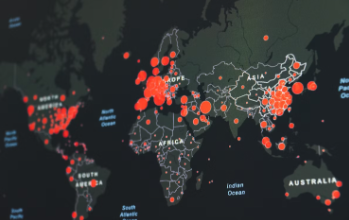
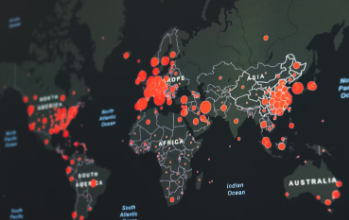
But, how large is the disparity? According to the National Institute of Health, countries in Sub-Saharan Africa carry a "disproportionate burden of HIV,” accounting for “74% of the 1.5 million AIDS related deaths in 2013” (HIV Infection and AIDS in Sub-Saharan Africa: Current Status, Challenges and Opportunities). HIV/AIDs is not the only virus that disproportionately affects different regions across the globe. Many countries in South-East Asia and Africa are burdened with Tuberculosis. According to the World Health Organization, Southeast Asia makes up 45% of worldwide Tuberculosis cases, while Africa makes up 24%.
It’s no coincidence that some of the most economically disadvantaged countries exist in these regions. For example, Mozambique, an African country, is one of the poorest countries, and it accounts for some of the most HIV cases globally. Furthermore, Myanmar, a country in South East Asia, is also one of the poorest countries, and they account for some of the most Tuberculosis cases globally.
Countries at an economic disadvantage do not have the quality or quantity of resources. The World Health Organization has found a link between lower-income countries and adolescent mortality rates. Children who were born in lower income countries are 13 times more likely to die before the age of 5 (Health inequities are shortening lives by decades). The disparity persists, as the same report shows that lower income countries account for 94% of maternal deaths between the year 2000 and 2023, even though maternal mortality has declined by 40% globally (Health inequities are shortening lives by decades).
This disparity in global wellness is closer to us than we realize. In the United States, we may have a lot more resources than other countries, but access to those resources are often limited. Many of us do not have proper healthcare coverage, while others may be one financial crisis away from poverty. Whether it be here in the United States, in Mozambique, or in Myanmar, everyone is deserving of adequate healthcare. Steps are being taken to ensure that everyone receives the medical care that they deserve. The World Health Organization has called on local and national governments to reduce social and economic inequality and to invest in public services that support underprivileged populations (Health inequities are shortening lives by decades). As much as healthcare is a right, not everyone is privileged enough to receive it. And, though it seems impossible for one person to tackle this worldwide issue, awareness is the first step towards lessening the disparity in global health and wellness. Understanding the world’s problems brings us one step closer to solving them.
References:
Kharsany, A. B. M., & Karim, Q. A. (2016). HIV Infection and AIDS in Sub-Saharan Africa: Current Status, Challenges and Opportunities. The Open AIDS Journal, 10(1), 34–48. https://doi.org/10.2174/1874613601610010034
WHO. (2023). 1.1 TB Incidence. Who.int. https://www.who.int/teams/global-programme-on-tuberculosis-and-lung-health/tb-reports/global-tuberculosis-report-2024/tb-disease-burden/1-1-tb-incidence
Duke Global Health Institute. (2022). What Is Global Health? Duke Global Health Institute. https://globalhealth.duke.edu/what-global-health
WHO. (2025, May 6). Health inequities are shortening lives by decades. Who.int; World Health Organization: WHO. https://www.who.int/news/item/06-05-2025-health-inequities-are-shortening-lives-by-decades