The Healing Power of Touch: Jordan Barker's Art Therapy Journey
Written By: Eshrat Quader and Rhea Mittal
When the world slowed during the pandemic, Jordan Barker discovered an ache he hadn’t he recalls, not only the warmth of a hug or handshake, but the grounding sensation of contact itself.
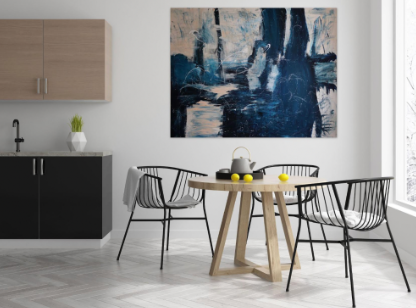
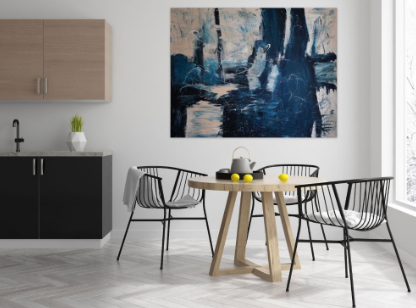
With no artistic background or training, he began to paint, smearing color across blank canvases. The process of creating something from nothing, of feeling texture respond beneath his hands, became a form of relief. “It felt good,” he says. “It was about reconnecting.” His first piece confirmed that what he was doing mattered.
When his friend paused, visibly moved, Jordan understood the emotional potential of what he had created. Soon after, he was asked to feature his paintings with the Durst Family in the lobby of one of their Class A office towers. For a man who had never considered himself an artist, that moment changed everything.
As isolation deepened, Barker’s art became his bridge back to human connection. He discovered firsthand what art therapists have long ). Art helps externalize emotion, transforming feelings that might be too difficult to articulate into form and color.
The act of touching and shaping the paint is central to his process. “It’s always connected to touch,” he says. “It’s about emotional release.” He uses acrylics, mixed media, aerosol, and oil to build depth and texture, often repurposing materials from his everyday life. The result is art that literally bears fingerprints, a record of physical presence and emotional energy.
This approach mirrors the sensory dimension that art therapists identify as essential to healing. According to Art Therapy in the Time of COVID-19, “The tactile experience of handling materials becomes a grounding process through which clients can regain a sense of control, connection, and calm” (Abanaat 3). Barker’s work embodies that principle; in touching paint, he reclaims the touch that isolation took away.
Unlike most artists, Barker invites others to touch his work too. Gallery visitors are encouraged to press their palms against the surface, to feel the ridges and textures. Their reactions are often emotional; some gasp, others fall silent. These encounters turn the viewing experience into a dialogue between artist, artwork, and audience. Art, Barker believes, should be “a full-body experience.”
The recurring phrase “quiet chaos” in his artist statement captures the tension between stillness and turbulence. From a distance, his canvases appear calm; up close, they pulse with motion. The concept reflects what art therapists describe as the “integration of opposites,” finding balance between disorder and order, as well as emotion and structure (Abanaat 6). Painting, for Barker, became a form of mindfulness. “When I’m painting,” he says, “it’s the only thing that shuts the world out.” This sense of focus echoes art therapy practices designed to cultivate presence through sensory engagement, where the tactile act itself becomes meditation.
Barker owns and operates his own commercial real estate company where he specializes in helping tenants expand across the US., both with office and retail space. When lockdowns halted everything, he faced financial strain and isolation. He turned to painting to cope, seeking to “bring texture back” into his life, both literally and figuratively. Within a year, his work was picked up by a gallery and attracted celebrity collectors. But success wasn’t the main reward; rather, it reignited his entrepreneurial and creative spirit. Barker uses art not only as a therapeutic modality, but also as a way to bring people together, create community, and cultivate new business. Through art, Barker has continued to grow his real estate practice and also raise capital for real estate investments.
Today, Barker continues to explore how touch, texture, and emotional honesty can transform both artist and audience. He hopes those who experience his work leave more present, grounded, and aware of how deeply we need connection. “Touch,” he says, “is what reminds us we’re still here.”
Through his art, Barker unknowingly stepped into the world of therapeutic creation, demonstrating that art, even outside the clinical setting, can offer what the American Art Therapy Association calls “restoration, empowerment, and meaning through the creative process” (“About Art Therapy”). His story proves that even in isolation, the human need for contact can find its way—through color, through movement, and through the healing power of the hand.
References:
Abanaat, H. Art Therapy in the Time of COVID-19. Abanaat.ir, 2020, https://abanaat.ir/uploads/4b6b7c86e09a4458bf587459a7bd94ba.pdf.
“About Art Therapy.” American Art Therapy Association, 2023, https://arttherapy.org/about-art-therapy/.
Interview with Jordan Barker on October 9, 2025