
The Mental Health of Healthcare Workers
Written By: Rhea Mittal and Laila Ibrahim
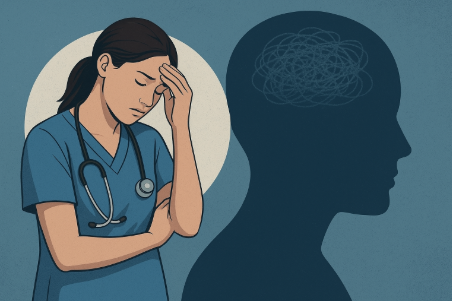
Healthcare workers worldwide are bearing an invisible burden. Burnout, depression, anxiety and moral injury, have become alarmingly common in the healthcare field. This is a crisis that threatens not only individual well-being but also the stability of health systems themselves. Far from fading with the pandemic, the strain has persisted, highlighting the need for systemic solutions.
The scale of the problem is staggering. According to a WHO (World Health Organization) consultation in April 2024, at least one quarter of healthcare workers reported symptoms of anxiety, depression, or burnout between January 2020 and April 2022. These levels have shown little to no decline despite the public acknowledgement of the crisis. In the US, a large panel survey of more than 2,600 primary-care physicians, pediatricians, nurse practitioners, and physician assistants found that 26 percent reported symptoms of mental illness, yet only one in five sought treatment in the previous year. Roughly one quarter of respondents met diagnostic criteria for mental distress severe enough to warrant clinical concern.
There are several factors that help explain this widespread distress. Overwhelming work demands, staff shortages, excessive workloads, and long hours. Many healthcare workers continue to practice in under-sourced environments where pay is low, protections are inadequate, and safety measures fall short. The COVID-19 pandemic amplified these pressures, adding layers of fear and uncertainty, from the risk of infection to rapidly changing guidelines and the challenges of combating misinformation. Yet even when workers recognize their own distress, they often face steep barriers to getting help. Time constraints, cost, stigma and concerns about confidentiality or licensing implications discourage many from seeking care.
The consequences of this crisis extend far beyond individual suffering. Persistent burnout leads to absenteeism, low morale, mistakes, and turnover, all of which directly undermine patient care. The WHO notes that workplace strikes and absences are symptomatic of these systematic failures. Untreated mental illness results in increased health and multiplying financial and social costs. A healthcare system cannot function effectively when its workforce is mentally exhausted.
There are, however, signs of progress. Policy and legislative action have begun to address these issues. In the United States, the Dr. Lorna Breen Health Care Provider Protection Act, directs funding toward evidence-informed measures aimed at reducing burnout, preventing suicide, and supporting mental health among healthcare workers. On an organizational level, the presence of strong supervisory support has been shown to buffer against mental distress. In the US survey, workers with supportive supervisors were less likely to meet diagnostic criteria for mental illness, even under high stress. This underscores the importance of training supervisors to recognize and address stress in their teams.
Reducing barriers to care is the first step. Normalizing help-seeking, lowering costs, clarifying licensing concerns, and protecting confidentiality, can encourage more healthcare workers to access mental health services. Globally, the WHO has been fostering projects in Spain and Qatar, piloting evidence-based interventions at the facility level. These efforts provide hope that systemic approaches can begin to make an impact.
Ultimately, the mental health of healthcare workers is a critical acknowledgement. The pandemic may have sharpened the world’s awareness of the problem, but the resource scarcity, understaffing, stigma and cultural expectations predate COVID-19 and remain unresolved. The burden healthcare workers carry is not one they should be asked to shoulder alone. Real progress will come from cultural shifts that normalize care, institutional reforms that prioritize well-being and policies that invest in the health of those who dedicate their lives to caring for others.
References:
“1 in 4 US Healthcare Workers Report Mental Distress during COVID, Survey Suggests.” CIDRAP, www.cidrap.umn.edu/covid-19/1-4-us-healthcare-workers-report-mental-distress-during-covid-survey-suggests.
Anger, W Kent, et al. “Addressing Health Care Workers’ Mental American Journal of Public Health, U.S. National Library of Medicine, Feb. 2024, pmc.ncbi.nlm.nih.gov/articles/PMC10916736/.
“Protecting Health and Care Workers’ Mental Health and World Health Organization, World Health Organization, www.who.int/news/item/25-04-2024-202404_protecthw_mentalhealth.