The Effects of AI in Medicine Today
Written by: Rhea Mittal
Artificial intelligence commonly known as AI is being used as a source of information for various industries with healthcare being a primary beneficiary. The integration of AI into medical practice paints a future for enhanced diagnostic accuracy and personalized treatment plans. However, with these technological advancements also come challenges such as ethical considerations, data privacy concerns, and the necessity for human oversight. It is important to explore the role of AI in medicine drawing on how it will be applied, its benefits, and potential kinks.
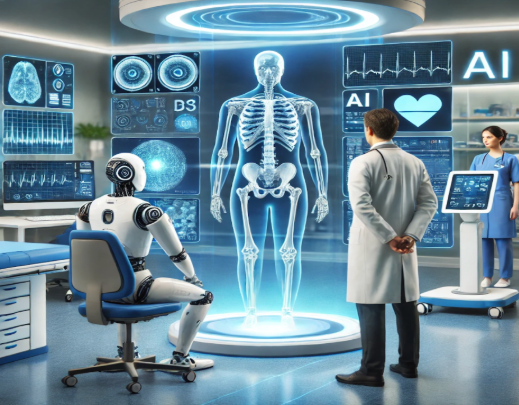
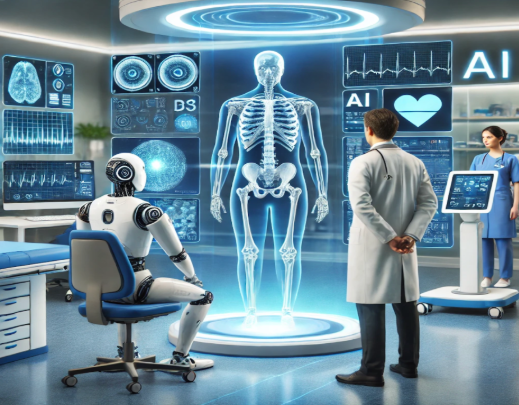
AI’s capability to process datasets and identify intricate patterns has significantly improved disease diagnosis and treatment selection. AI can now assist clinical staff with decision making when it comes to patient care. Rather than simply automating tasks, AI is developing technologies to advance patient care across the healthcare world. For example, AI algorithms can analyze medical images to detect abnormalities that may be overlooked by the human eye. This can then allow for earlier interventions and improving patient outcomes.
Beyond diagnosing, AI contributes to personalized medicine by tailoring treatment plans to individual patient profiles. By analyzing genetic information, lifestyle factors, and medicinal histories, AI can predict how patients might respond to a certain treatment which allows healthcare providers to devise a more effective plan for distinct individuals. This approach not only enhances treatment efficiency but improves patient satisfaction and adherence.
The integration of AI into healthcare fields has streamlined many administrative and clinical tasks, resulting in increased efficiency. AI helps healthcare providers improve operations and simplify complex procedures. For example, AI powered systems can automate appointment schedules, patient tracking, and insurance claim processing - allowing doctors and nurses to focus more on patient care. AI driven tools can also monitor patient vital signs in real time alerting clinicians to potential issues before they escalate into emergencies. In this sense, AI contributes to cost savings and improved healthcare delivery.
Despite its advantages, AI in medicine raises significant ethical and data privacy concerns. Ethical concerns arise when AI is used for diagnosis or treatment as errors can occur and lead to incorrect medical decisions. Ensuring the accuracy and reliability of AI systems is crucial as any inaccuracies can lead to severe consequences. Data privacy is another critical issue as AI systems require access to extensive patient data to work effectively. Protecting this sensitive information from breaches and unauthorized access is essential to maintaining patient trust and complying with legal regulations.
While AI has offered many possibilities, nothing matches the human eye. AI can be used as an assistance but it’s still the doctor who examines patients, makes diagnoses, and charts the best course of treatment. Human expertise is crucial to interpret AI generated results, contextualize them, and make informed decisions about individual patient cases.
AI systems can degrade over time and become less accurate as it is faced with unseen circumstances or new diseases. Continuous monitoring and recalibration of AI tools is necessary to ensure their ongoing effectiveness in clinical practice. AI is only as good as the data on which it is trained.
The integration of AI into medicine holds immense potential with its ability to change healthcare delivery offering benefits like enhanced diagnostics, personalized treatments, and improved efficiency. These advancements, however, do come with challenges that must be addressed in order to ensure effective implementation of AI. Ethical considerations, data privacy concerns, and the necessity for human oversight are critical factors that healthcare organizations must navigate. By addressing these issues, the medical community can use AI to improve patient outcomes and advance the quality of care in the digital age.
References:
Alowais, Shuroug A., et al. “Revolutionizing BioMed Central, BioMed Central, 22 Sept. 2023, bmcmededuc.biomedcentral.com/articles/10.1186/s12909-023-04698-z.
Pros & Cons of Artificial Intelligence in Medicine | Drexel CCI, drexel.edu/cci/stories/artificial-intelligence-in-medicine-pros-and-cons/. Accessed 27 Mar. 2025.
“What You Should Know about AI in Medicine.” Cedars, www.cedars-sinai.org/blog/what-you-should-know-about-ai-in-medicine.html. Accessed 27 Mar. 2025.