Gene Therapies to Cure Sickle Cell Disease
Written by: Sahannah Seemungal
Sickle cell disease is a debilitating and life-threatening genetic red blood cell disorder, affecting an estimated 100,000 people in the U.S. today, primarily within certain ethnic groups including African Americans and Hispanic Americans. Until late 2023, treatment options for sickle cell disease were limited. It was mainly managed by pain medications, blood transfusions to lower the risk of complications, and blood and bone marrow transplants. However, these transplants come with their own set of challenges, often requiring a matching sibling or unrelated donor, and benefit only about 25% of patients. Recently, rapid technological advancements have led to the development of groundbreaking therapies, such as Casgevy and Lyfgenia—gene therapies that are the first in history to potentially cure a hereditary condition.
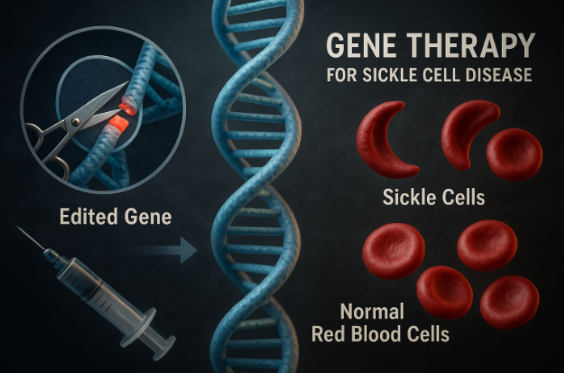
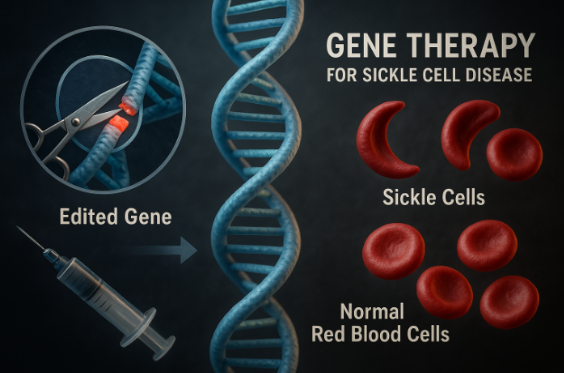
Sickle cell disease occurs when individuals inherit a mutation in the hemoglobin gene from both parents. Hemoglobin is an essential protein in red blood cells that carries oxygen throughout the body and delivers it to other organs to help them function properly. This mutation affects hemoglobin proteins, causing them to stick together and deforming the red blood cells into hard, sticky, and crescent-shaped forms rather than the normal round, flexible shape. The sickle cells block blood flow and cause intense pain at unpredictable times, known as sickle cell crisis. On top of the excruciating pain, it can impact every organ, leading to strokes in children and kidney failure in patients as young as in their 30s.
Casgevy and Lyfgenia are recently FDA-approved gene therapies that offer hope to patients ages 12 and older to cure the disease. Both treatments involve chemotherapy to reduce the number of sickle cells before modifying the patient’s blood stem cells, which are specialized immature cells that can develop into various types of blood cells. Casgevy utilizes CRISPR/Cas9, a type of genome editing technology, to accurately modify these stem cells by targeting specific areas of DNA to remove, add, or replace genetic material. After modification, the stem cells are transplanted back into the patient to produce greater levels of fetal hemoglobin—a type of hemoglobin that facilitates oxygen delivery and prevents red blood cells from sickling.
Lyfgenia works differently by genetically modifying patients’ blood stem cells to produce HbAT87Q, a form of anti-sickling adult hemoglobin. This therapy uses a modified virus, known as lentivirus, as a gene delivery vehicle to introduce a functional hemoglobin-producing gene into the stem cells. The modified stem cells are then transplanted back into the patient, reducing the risk of red blood cell sickling and blood vessel blockage. Lyfgenia is particularly beneficial for patients with a history of vaso-occulsive events, where blood flow is blocked.
These gene therapies have shown promising results in clinical trials. In Casgevy, 93.5% of patients receiving this treatment did not experience pain episodes for at least one year during their two-year follow-up period. Between 6 and 18 months after the infusion with Lyfgenia, 88% of patients in the trial experienced complete elimination of blockages in blood flow. However, it is important to note that, as with chemotherapy and the underlying disease, common side effects for both treatments include mouth sores, fever, and low levels of platelets and white blood cells. Additionally, there is a slight risk of patients developing blood cancer when treated with Lyfgenia, so lifelong monitoring for these malignancies is necessary.
Essentially, these two cell-based therapies represent a breakthrough for individuals whose lives have been severely disrupted by the disease. By directly addressing the mutation that is responsible for sickle cell disease, they offer the potential for a long-term cure and a significantly improved quality of life. As research continues, gene editing therapies hold great promise for delivering more precise and effective treatments for patients with limited treatment options.
References:
National Heart, Lung, and Blood Institute. "Sickle Cell Disease – Treatment." National Institutes of Health, https://www.nhlbi.nih.gov/health/sickle-cell-disease/treatment.
U.S. Food and Drug Administration. "FDA Approves First Gene Therapies to Treat Patients with Sickle Cell Disease." FDA, 8 Dec. 2023, https://www.fda.gov/news-events/press-announcements/fda-approves-first-gene-therapies-treat-patients-sickle-cell-disease.
Yale Medicine. "Casgevy and Yale Medicine, https://www.yalemedicine.org/news/casgevy-and-lyfgenia