
The Potential Use of Virtual Reality in Physical Therapy
Written By: Rhea Mittal and Karina Fernandez-Saito
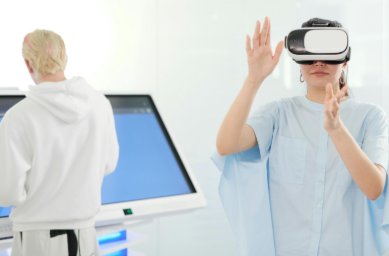
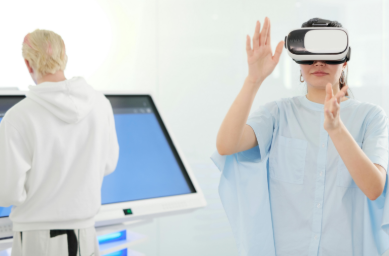
Virtual reality (VR) is rapidly transforming the field of physical therapy, offering an innovative, engaging, and evidence-based approach to rehabilitation. By immersing patients in simulated environments that replicate real-world challenges, VR allows therapists to deliver targeted interventions in a safe and controlled manner. This technology has advanced beyond novelty stats to become an effective clinical tool, with research demonstrating benefits across a wide range of conditions, including strokes, Parkinson’s disease, multiple sclerosis, chronic pain, orthopedic injuries, and vestibular disorders. The American Physical Therapy Association (APTA) identifies VR as a valuable part of modern, digitally enabled practice and emphasizes its potential to increase patient engagement, improve functional outcomes, and expand access to care through telehealth delivery.
One of the most compelling advantages of VR in physical therapy lies in its ability to enhance patient engagement and adherence. Traditional rehabilitation exercises can be repetitive, monotonous, and challenging to sustain over time, which leads to dropout rates as high as 70%. By contrast, VR introduces a gamified and interactive dimension that motivates patients to participate more consistently. Whether reaching for virtual objects, walking through simulated landscapes, or maintaining balance on shifting platforms, patients often report greater enjoyment and confidence when using VR systems. This sense of immersion directly addresses one of the challenges in rehabilitation by making therapy something patients want to do rather than something they feel forced to endure.
Beyond its motivational benefits, VR offers clinicians a powerful means of capturing objective data about patient movement. Many systems track range of motion, balance metrics, reaction times and other functional measures. Such information provides details that would be difficult to obtain through observation alone. This data can guide therapists in tailoring treatment plans more precisely to each patient’s needs and monitoring progress over time. For patients with neurological conditions, this kind of feedback is valuable in supporting motor relearning and neuroplasticity, allowing repeated practice of movements with immediate correction and reinforcement.
VR supports remote delivery of physical therapy services. Telerehabilitation programs using VR have shown promise in delivering high-quality care to patients who face barriers to attending in-person sessions, such as those living in rural areas or with limited mobility. Studies indicate that home-based VR therapy can produce functional outcomes similar to clinical-based care while reducing costs and increasing convenience. This potential for expanded access is particularly relevant in the context of an aging population and ongoing provider shortages.
However, successfully implementing VR in clinical practices requires careful planning. Choosing the right technology is crucial; clinics must invest in reliable headsets, motion trackers, and software applications tailored to their therapeutic goals. Staff training is equally important. Research has identified clinician unfamiliarity and low confidence in using VR as barriers. To combat these challenges, patients will need hands-on workshops, small-group learning, and peer mentoring.
Despite its promise, VR in physical therapy still faces challenges. Equipment costs, training requirements, and variability in software quality can be obstacles, particularly for smaller clinics or underserved communities. Equitable access must remain a priority as the technology becomes more widespread. Although growing evidence supports VR’s effectiveness, studies are needed to clarify optimal dosing, long-term outcomes, and cost-benefit analyses across diverse conditions.
The momentum behind VR is remarkable. As technology advances to incorporate more realistic haptic feedback, artificial intelligence for adaptive programs, and seamless telehealth integration, its potential will only expand. For clinics willing to invest thoughtfully in this innovation, VR offers a transformative opportunity to deliver more engaging, personalized, and effective care to patients in need.
References:
Bateni, Hamid, et al. “Use of Virtual Reality in Physical Therapy as an Intervention and Diagnostic Tool.” Rehabilitation Research and Practice, U.S. National Library of Medicine, 25 Jan. 2024, pmc.ncbi.nlm.nih.gov/articles/PMC10834096/.
Reilly, Clifford A, et al. “Virtual Reality-Based Physical Therapy for Patients with Lower Extremity Injuries: Feasibility and Acceptability.” OTA International : The Open Access Journal of Orthopaedic Trauma, U.S. National Library of Medicine, 18 May 2021, pmc.ncbi.nlm.nih.gov/articles/PMC8568393/.
“Virtual Reality.” APTA, www.apta.org/patient-care/interventions/virtual-reality. Accessed 13 July 2025.