
Cold Weather, Dry Skin, and the Clinical Role of Hyaluronic Acid
Written By: Mariam Shahzad and Laila Ibrahim
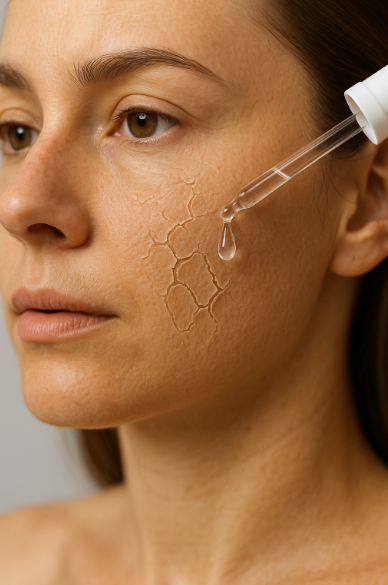
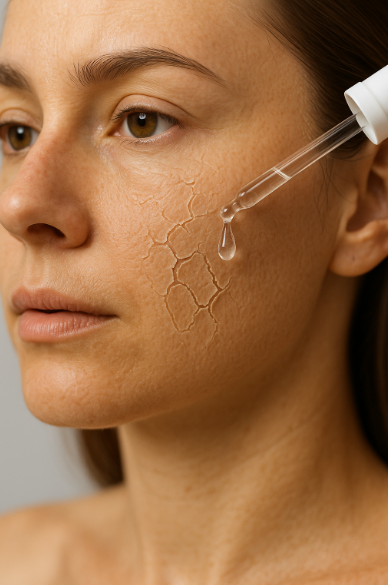
As winter approaches, skin hydration levels naturally decline. Cold outdoor air contains very little moisture, and indoor heating further strips hydration from the skin. Together, these conditions disrupt the skin barrier and increase transepidermal water loss (TEWL), resulting in dryness, irritation, and heightened sensitivity. One of the most trusted and widely studied ingredients used to support winter skin health is Hyaluronic Acid.
Hyaluronic acid is a naturally occurring substance found throughout the body, especially in the skin, joints, and connective tissue. Its primary role is hydration. It can bind large amounts of water, helping the skin remain plump, smooth, and elastic. With age and ongoing environmental stress, the skin’s natural moisture supply decreases, making it more difficult to retain moisture during colder months.
Unlike heavy creams that sit on the surface, hyaluronic acid functions as a humectant, meaning it attracts and holds water within the skin. This improves overall hydration, softens fine lines caused by dryness, and supports the normal function of the skin barrier. Well-hydrated skin is also better able to repair itself and maintain balance.
Clinical studies show that consistent topical use of hyaluronic acid leads to noticeable improvements in skin hydration and elasticity within several weeks. Due to the variation in molecular weights, some forms hydrate deeply within the skin, while others provide immediate surface smoothing.
During the winter months, flare-ups of inflammatory skin conditions, such as eczema and rosacea, become more common. A weakened skin barrier allows irritants to penetrate more easily, leading to increased redness, itching, and discomfort. Hyaluronic acid helps counteract this by restoring hydration and strengthening the protective barrier without adding irritation.
It is also commonly recommended after dermatologic procedures such as chemical peels, laser treatments, and microneedling due to its role in supporting wound healing and reducing post-procedure dryness.
The application method is especially important during winter. Hyaluronic acid should be applied to slightly damp skin, followed by a moisturizer to seal hydration in. When used correctly, it enhances hydration rather than pulling moisture from deeper layers of the skin.
Hyaluronic acid is not limited to cosmetics. It is widely used in:
Joint injections for osteoarthritis
Ophthalmologic surgeries
Dermal fillers
Wound healing products
Its broad medical use reflects its safety, biocompatibility, and essential role in tissue hydration and repair.
Winter dryness is more than a surface-level concern. It reflects more profound changes in skin barrier function caused by environmental stress. Hyaluronic acid remains one of the most reliable and evidence-supported ingredients for protecting the skin during colder months. With correct use, it provides both immediate hydration and long-term support for skin health.
References:
Diaz I, Namkoong J, Wu J, Boyd T. “Efficacy Evaluation of a Topical Hyaluronic Acid Serum in Facial Photoaging.” Dermatology and Therapy, U.S. National Library of Medicine, pubmed.ncbi.nlm.nih.gov/34176098/. Accessed 7 Dec. 2025.
Papakonstantinou, Eleni et al. “Hyaluronic Dermato-endocrinology vol. 4,3 (2012): 253-8. doi:10.4161/derm.21923