
The Brain's Night Shift: The Hidden Medicine of Rest
Written By: Ihsaan Alam and Mariam Shahzad
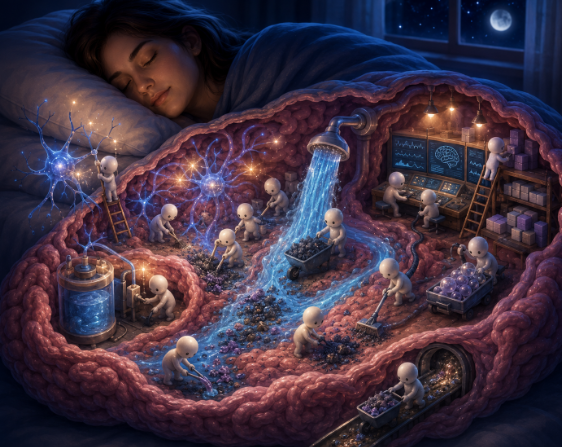
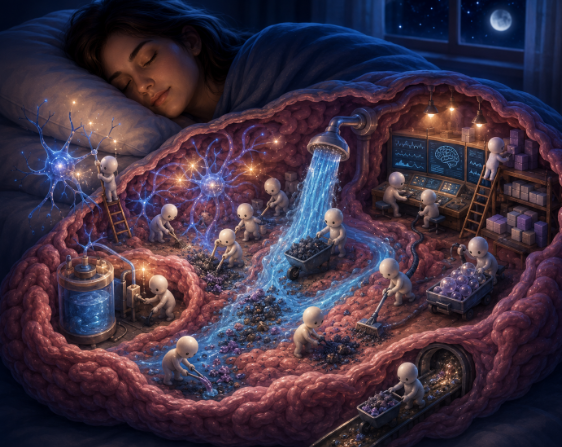
Sleep is often described as a pause from life, a soft interruption between one day and the next. In reality, sleep is not passive at all. Beneath the stillness of the sleeping body, the brain enters one of its most important states of maintenance. Memories are refined, hormones are regulated, immune signals shift, and a remarkable housekeeping system becomes more active. This system, known as the glymphatic system, has changed the way researchers think about sleep, brain health, and the long arc of neurodegenerative disease.
The glymphatic system is a fluid clearance pathway in the central nervous system. Its name comes from its relationship to glial cells and its resemblance to the lymphatic system found in the rest of the body. While the brain does not use a traditional lymphatic network in the same way as peripheral tissues, it still must remove metabolic waste. Neurons are highly active cells, and their activity produces byproducts that must be cleared to preserve healthy brain function. The glymphatic system helps move cerebrospinal fluid through spaces surrounding blood vessels, allowing waste products to be carried away from brain tissue.
What makes this system especially compelling is its relationship to sleep. Foundational research in mice showed that during sleep, the space between brain cells expands, allowing cerebrospinal fluid to move more efficiently through brain tissue. This increased flow was associated with greater clearance of beta-amyloid, a protein strongly linked to Alzheimer's disease pathology. In simpler terms, sleep may give the brain the physical conditions it needs to rinse away some of the molecular debris that accumulates during waking life.
This does not mean that one poor night of sleep causes dementia, nor does it mean that sleep alone can prevent neurodegenerative disease. The human brain is far more complex than any single mechanism. Genetics, vascular health, inflammation, aging, education, environment, and chronic disease all contribute to neurological risk. Still, the lymphatic system offers a powerful biological explanation for something clinicians have long observed: sleep is not optional maintenance. It is a pillar of brain health.
Recent human research has added to this story. National Institutes of Health reporting in 2024 described evidence of a brain waste clearance system being visualized in people, supporting the idea that cerebrospinal fluid moves through organized channels rather than drifting randomly through tissue. While the field is still developing, these findings strengthen the clinical importance of sleep quality, especially for patients at risk for cognitive decline.
The implications extend beyond neurology. Poor sleep is associated with hypertension, insulin resistance, mood disorders, impaired attention, and weakened immune regulation. Through the lens of the glymphatic system, sleep also becomes a matter of cellular sanitation. The brain is not simply resting at night. It is recalibrating, sorting, and cleaning.
For patients, this science offers a practical message. Protecting sleep should be treated with the same seriousness as protecting diet, exercise, and blood pressure. A consistent sleep schedule, morning light exposure, reduced caffeine late in the day, limited screen use before bed, and treatment of sleep disorders such as sleep apnea are not merely lifestyle suggestions. They are preventive health strategies.
Sleep apnea deserves particular attention. In obstructive sleep apnea, breathing repeatedly pauses or becomes shallow during sleep, causing oxygen fluctuations and sleep fragmentation. A patient may spend eight hours in bed but still fail to achieve restorative sleep. For someone with loud snoring, morning headaches, daytime sleepiness, or witnessed breathing pauses, medical evaluation can be life-changing.
The beauty of this topic is that it reframes rest as active care. In a culture that often praises exhaustion, the glymphatic system reminds us that biology has different priorities. The brain cannot be endlessly productive without repair. Night after night, sleep offers the brain a chance to restore its internal environment, clear what it no longer needs, and prepare for the demands of consciousness.
Medicine often advances by making the invisible visible. The glymphatic system does exactly that. It reveals that rest is not laziness, and sleep is not wasted time. Sleep is treatment, prevention, and preservation. It is the brain's quiet labor, performed in darkness, for the sake of the day ahead.
References:
Jessen, N. A., Munk, A. S. F., Lundgaard, I., & Nedergaard, M. The Glymphatic System: A Beginner’s Guide.
Xie, L., Kang, H., Xu, Q., Chen, M. J., Liao, Y., Thiyagarajan, M., et al. Sleep Drives Metabolite Clearance from the Adult Brain.
National Institutes of Health. Brain Waste Clearance System Shown in People for First Time.