When Smell Fades: The Quiet Human Cost of Olfactory Loss
Written By: Ihsaan Alam and Mariam Shahzad
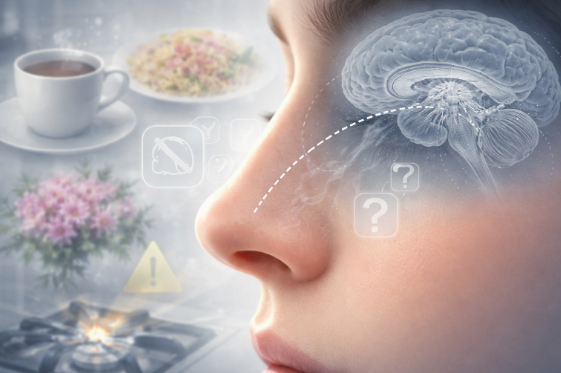
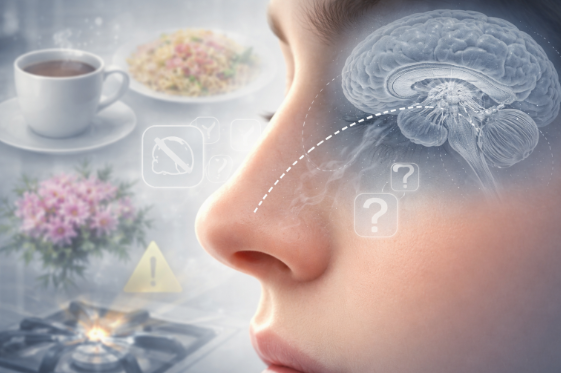
Among the human senses, smell is often overlooked. We usually think of sight and hearing as the most important for safety and communication, but smell doesn’t get much attention until something changes. It’s only when a familiar scent disappears, food loses its flavor, or a place no longer “smells like home” that people realize how important it actually is. In medicine, smell disorders are sometimes treated as minor, but in real life, they can be deeply disorienting. Losing your sense of smell isn’t just a small inconvenience—it can affect appetite, memory, safety, emotional well-being, and how connected someone feels to the world .
Smell plays a role in many everyday experiences. It helps us recognize people, detect danger, and enjoy simple things like food, rain, or flowers. It’s also strongly linked to memory, since certain scents can immediately bring back specific moments or emotions. Because of this, when smell fades or becomes distorted, the impact can feel very personal. It’s also hard for patients to explain, since there are no visible symptoms, but it can still take away from daily life. What’s lost isn’t just the sense itself, but part of how we experience and connect to the world .
There are different types of smell disorders. Hyposmia means a reduced sense of smell, while anosmia is a complete loss. Other conditions, like parosmia and phantosmia, can be even more confusing. In parosmia, familiar smells become unpleasant or distorted, and in phantosmia, people smell things that aren’t even there. These conditions show that smell loss isn’t always just “nothing”—sometimes it’s altered in ways that can be frustrating or even disturbing. For example, coffee might smell burnt or rotten instead of normal, and food may become unrecognizable .
Smell is also closely connected to taste. Even though the tongue can detect basic tastes like sweet or salty, most of what we think of as “flavor” actually comes from smell. This is why many people who think they’ve lost their sense of taste are actually experiencing smell dysfunction. As a result, food may seem bland, metallic, or just off. Some people lose interest in eating, while others try to compensate by adding more salt or sugar. Over time, this can affect nutrition and overall health .
There are many possible causes of smell loss, including aging, sinus issues, smoking, head injuries, medications, and neurological conditions. More recently, viral infections like COVID-19 have brought more attention to this issue. Changes in smell and taste are now recognized as symptoms of Long COVID, and for many people, these effects can last much longer than expected. The uncertainty of recovery can be frustrating, especially since the condition is invisible and often misunderstood .
Despite this, smell loss is often minimized. It may not seem as serious as other medical conditions, but it still plays a key role in safety and quality of life. Smell helps detect smoke, gas leaks, and spoiled food, and it contributes to comfort and emotional stability. Without it, some people feel disconnected or like something is missing from their everyday experiences. In more severe cases, this can even lead to anxiety or depression—not because the condition is dramatic, but because it’s constant and affects so many small parts of life .
Because of this, proper evaluation is important. Diagnosis usually depends on identifying the underlying cause, which may involve medical history, physical exams, and smell testing. Sometimes the sense of smell returns, but in other cases, recovery can be slow or incomplete. Even when there isn’t a clear treatment, acknowledging the condition still matters. Patients don’t just need a solution—they need to feel understood and taken seriously.
References:
Centers for Disease Control and Prevention. “Long COVID Signs and Symptoms.” CDC, 9 Mar. 2026. Accessed 28 Mar. 2026.
National Institute on Deafness and Other Communication Disorders. “Smell Disorders.” NIDCD, National Institutes of Health, 31 July 2023. Accessed 28 Mar. 2026.
National Institute on Deafness and Other Communication Disorders. “Taste Disorders.” NIDCD, National Institutes of Health, 31 July 2023. Accessed 28 Mar. 2026.
If you want, I can also make it sound even more like a real hospital or university medical newsletter, with a stronger opening hook and a more polished title/subtitle format.