The Hidden Cost of Cosmetic Surgery
Written By: Karina Fernandez-Saito and Eshrat Quader
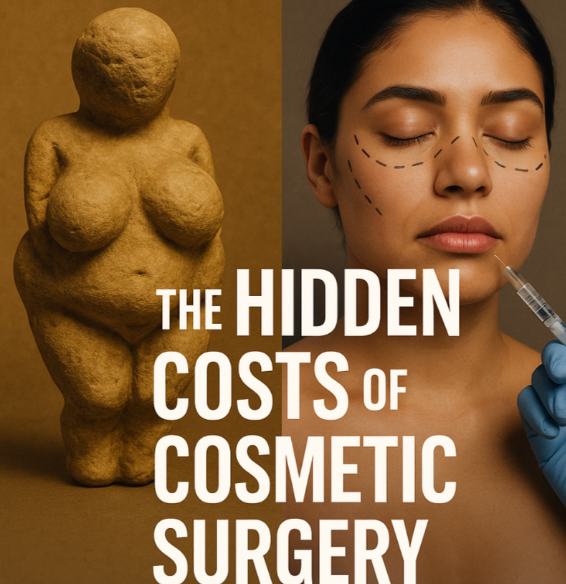
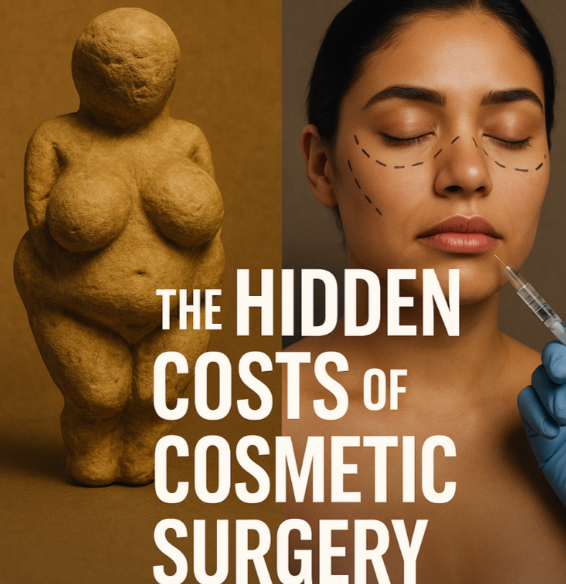
When walking through the Natural History Museum, you can catch a glimpse of tools and artwork of ancient civilizations. In many early societies, like ancient Europe, Venus figurines were known to symbolize feminine beauty and fertility. These sculptures varied, some featured as voluminous hips and breasts, to flatly made figurines, both lacking facial features. Female beauty standards have always been prevalent throughout society, as demonstrated by the lack of male equivalent depictions of sexual or reproductive functions in sculptures. Today, these standards have only intensified. Beauty standards have only escalated as times progressed, causing a rise in dangerous cosmetic surgeries pushed onto young women in modern times.
Celebrities and influencers play a major role in shaping these ideals. Constant exposure to highly unrealistic beauty standards have caused women to seek out cosmetic procedures to reconstruct their looks as an effort to increase their self-esteem. According to a systematic review of “Social Media Influence on Body Image and Cosmetic Surgery Considerations,” the constant exposure to enhanced images sets an unrealistic beauty standard that users are constantly comparing themselves to (Mironica et al., 2024). These harsh comparisons and exposure to idealistic beauty standards through unrealistic filters, or validation through likes on posts, cause people to seek out surgical solutions for their self-image.
One increasingly popular option is minimally invasive procedures, such as hyaluronic acid based fillers. According to “Complications in Cosmetic Surgery,” soft tissue fillers saw a dramatic 154% increase in use from 2000 to 2014 (Khuger, 2015). These fillers are marketed as low-risk, temporary solutions lasting around a year. But newer research shows that hyaluronic acid may linger in the body longer than expected, increasing the risk of delayed complications such as infections that arise months or even years later. While procedures are perceived as safer alternatives to traditional surgery, they still carry significant and under- discussed risks.
Highly invasive cosmetic surgeries are still prevalent, as seen with the ‘Brazilian Butt Lift (BBL) epidemic.’ This procedure is known to be the deadliest cosmetic surgery, with 1 to 2 BBL augmentations resulting in death, out of 6,000 BBLs. That is often due to fat embolism, which is a condition that occurs when injected fat enters the bloodstream, resulting in blockage within vital organs. Despite these risks, many women seek BBLs abroad, often unaware of the different international surgical standards and postoperative care. Many women in the United States travel internationally to obtain this trendy procedure, despite the risks of surgeries in other countries. Additionally, patients often face long term complications like chronic pain and infections, which can severely impact quality of life.
To address this growing issue, medical professionals must emphasize both the physical risks and psychological motivations behind cosmetic surgery. Since, mental health and self-esteem are vital components of a person’s health that must be supported without the fear of being judged. It is important to comprehend the deep roots and modern influences on the female body image in order to empower individuals to make informed, safe decisions about their health.
References:
Ellin, Abby. “Brazilian Butt Lifts Surge, despite Risks.” The New York Times, 19 Aug. 2021, www.nytimes.com/2021/08/19/style/brazillian-butt-lift-bbl-how-much-risks.html.
Khunger, Niti. “Complications in Cosmetic Surgery: A Time to Reflect and Review and not Sweep Them Under the Carpet.” Journal of cutaneous and aesthetic surgery vol. 8,4 (2015): 189-90. doi:10.4103/0974-2077.172188
“Lets Talk Ancient Female Statuettes.” Sue Watling, 14 Sept. 2024, suewatling.com/lets-talk-hips-tits-and-buttocks/. Accessed 27 May 2025.
Mironica, Andreea , et al. “Social Media Influence on Body Image and Cosmetic Surgery Considerations: A Systematic Review.” Cureus, vol. 16, no. 7, 29 July 2024, https://doi.org/10.7759/cureus.65626.