How Social Media is Impacting Mental Health
Written By: Laila Ibrahim and Rhea Mittal
For over two decades, social media has allowed users to express themselves, create content, and communicate with each other. From MySpace to TikTok, users have been given complete creative freedom and an ability to share their lives and experiences with people globally. Social media is truly a blank canvas. However, social media has been negatively impacting the mental health of individuals, especially teenagers and young adults. Many individuals find themselves victims of cyberbullying, body image dissatisfaction, and lower self esteem (Pros & Cons: impacts of social media on mental health). Can this be prevented? Absolutely! There are many ways in which users can navigate social media safely and effectively. Nonetheless, it's important to acknowledge the ways in which social media may be negatively affecting us and others.
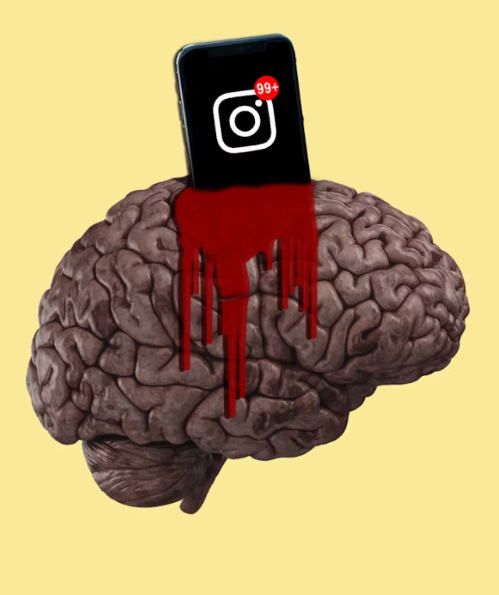
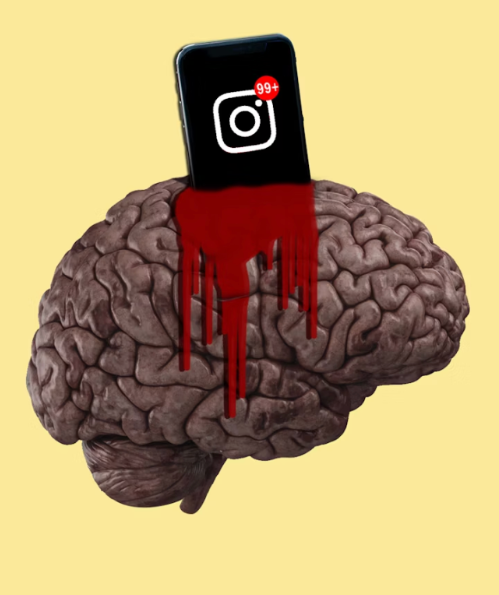
Most social media platforms, if not all, have a like or dislike feature, as well as a comment feature. These allow users to engage with content. So, what's the issue? Starting off with the like or dislike feature, the addictive nature of social media (Social Media’s Impact on Our Mental Health and Tips to Use It Safely) activates dopamine receptors in the brain. Dopamine is the brain’s natural reward system, it plays a crucial role in motivation, and motor functions (Mechanisms and Regulation of Dopamine Release). With this in mind, when an individual receives a like, they get a boost of dopamine, but when they don’t receive a like, the individual is left feeling upset and inadequate (Social Media’s Impact on Our Mental Health and Tips to Use It Safely). Moving onto the comment feature, not only will individuals seek validation through their comments, but others may use the comment section to bully and harass others, especially the person who is posting. Cyberbullying has been associated with anxiety and major depressive symptoms (Social Media and Mental Health: Benefits, Risks, and Opportunities for Research and Practice). Social media can negatively impact an individual in more ways than one. One of the most effective ways to limit the effect of social media is by limiting screen time. Studies have shown that most users spend at least two hours a day on social media platforms (Pros & Cons: impacts of social media on mental health). That’s two hours of mindlessly scrolling, artificial dopamine boosts, and possible involvement in cyberbullying (as the victim or perpetrator).
There are many ways in which an individual can make their time on social media safe, and possibly beneficial to their wellbeing.
The first and most obvious solution would be setting time limits for apps. This allows an individual to enjoy social media, while also preventing them from spending too much time online. Another way to make social media safe and healthy, is to involve oneself in a friendly online community that shares similar interests. This could be an online gaming community, a book club, or even a film club! Social media can be a great way to create networks between people and cultivate a supportive community between users.
Social media is an enjoyable way to pass time. It’s a great way to learn new information, and communicate with others. Whether an individual has an interest in sports, gaming, or astrology, they can and will find their community! It’s important to recognize the possibly detrimental aspects of social media. If an individual finds themselves, or someone else, in a negative mood from social media, it’s important to let someone know. Consider taking a break, and limit your time on social media.
References:
Zsila, Ágnes, and Marc Eric S. Reyes. “Pros & BMC Psychology, vol. 11, no. 1, 6 July 2023, pp. 1–2, bmcpsychology.biomedcentral.com/articles/10.1186/s40359-023-01243-x, https://doi.org/10.1186/s40359-023-01243-x.
Bounds, Dawn. “Social Media’s Impact on Our Mental Health and Tips to Use It Safely.” UC Davis Health, UC Davis Health, 10 May 2024, health.ucdavis.edu/blog/cultivating-health/social-medias-impact-our-mental-health-and-tips-to-use-it-safely/2024/05.
Naslund, John A., et al. “Social Media and Mental Journal of Technology in Behavioral Science, vol. 5, no. 3, 20 Apr. 2020, pp. 245–257, pmc.ncbi.nlm.nih.gov/articles/PMC7785056/, https://doi.org/10.1007/s41347-020-00134-x.
Cleveland Clinic. “How Social Media Can Negatively Affect Your Child.” Cleveland Clinic, Cleveland Clinic, 15 Jan. 2024, health.clevelandclinic.org/dangers-of-social-media-for-youth.
Liu, Changliang, and Pascal S. Kaeser. “Mechanisms and Regulation of Dopamine Release.” Current Opinion in Neurobiology, vol. 57, no. 1, 1 Aug. 2019, pp. 46–53, www.ncbi.nlm.nih.gov/pmc/articles/PMC6629510/, https://doi.org/10.1016/j.conb.2019.01.001.