AI and Its Relationship with Mental Health Care
Written by: Samira Esha and Sahannah Seemungal
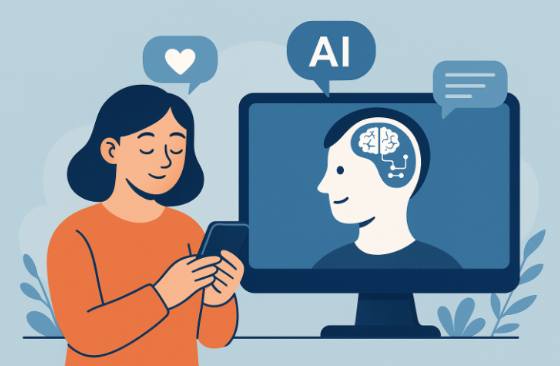
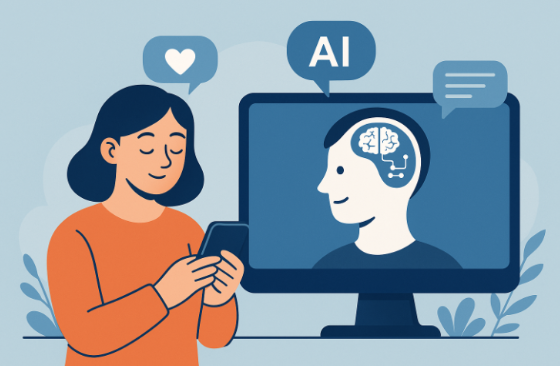
The demand for psychotherapy has been steadily increasing, but over 50 percent of people who would benefit are unable to access it. Many are not able to seek out mental health care because of the high cost and limited number of mental health professionals in various areas. To account for this, many individuals have turned to artificial intelligence, which provides a free and unlimited resource. While AI can be helpful to those who face these barriers, scientists and doctors are finding potential risks with the complete replacement of professional therapists with AI.
There are many benefits of artificial intelligence in the healthcare field. Human therapists often experience emotional burnout after constantly tackling the issues their patients may face, which can lead to less effective care. In these cases, having AI can be helpful because they are unable to experience this overexhaustion. Additionally, studies have shown that some patients feel more comfortable being honest while talking to AI chat systems, likely due to the perception that AI is non-judgmental. AI systems are also capable of remembering every detail from patient interactions, which may contribute to more accurate care. AI has many other benefits, including sorting through behavioral data, monitoring those at suicide risk, and predicting dementia by analyzing speech patterns.
A study conducted at Kyiv International University demonstrated AI’s potential to reduce mental health struggles. In the study, 104 women diagnosed with anxiety in active war zones were split into two.
Many studies have also found AI systems to be not only unhelpful in some situations, but sometimes even harmful. A research study at Stanford University showed that AI chatbots can be biased towards specific mental disorders. For example, some were found to have more stigma for alcoholics and schizophrenics than those who were depressed. Furthermore, sometimes chatbots are unable to pick up certain cues. One of these chatbots was told that the user had lost his job and wanted to know where the nearby bridges were, clearly showing distressed suicidal tendencies. The AI was unable to pick up on this and instead provided the user with examples of bridges. Finally, there are several cases of AI systems being discriminatory against people’s race and disabilities, or tending to spread misinformation, which can lead to misdiagnoses.
Artificial intelligence, alongside trained medical professionals, can be the most effective way to tackle the increased need for mental health care. AI can be valuable when individuals are unable to reach a therapist or to help mental health professionals with logistics like training new therapists or organizing patient information. However, when a patient's emotional well-being is at risk, it is important to go to a human therapist instead. Human connection and empathy between the patient and the therapist are critical components of treating mental health issues and cannot be replicated by AI.
References:
Monitor on Psychology, American Psychological Association, www.apa.org/monitor/2023/07/psychology-embracing-ai. Accessed 29 June 2025.
Spytska, Liana. “The Use of Artificial Intelligence in BioMed Central, BioMed Central, 28 Feb. 2025, bmcpsychology.biomedcentral.com/articles/10.1186/s40359-025-02491-9.
Wells, Sarah. “Exploring the Dangers of AI in Mental Health Care.” Stanford HAI, hai.stanford.edu/news/exploring-the-dangers-of-ai-in-mental-health-care. Accessed 29 June 2025.
Zhang, Zhihui, and Jing Wang. “Can Ai Replace Psychotherapists? Exploring the Future of Mental Health Care.” Frontiers in Psychiatry, U.S. National Library of Medicine, 31 Oct. 2024, pmc.ncbi.nlm.nih.gov/articles/PMC11560757/.