
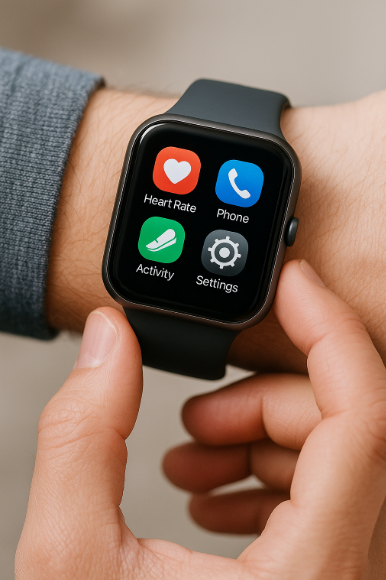
The Power of Wearable Technology
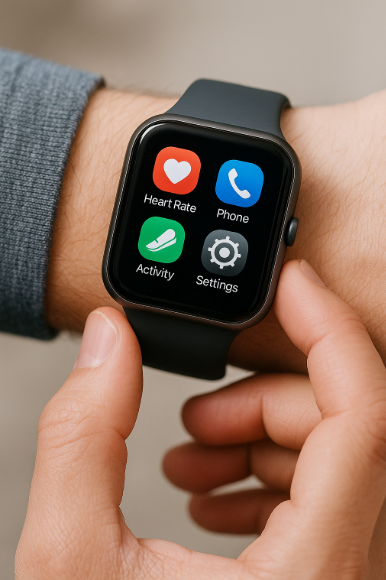
Written By: Rhea Mittal and Laila Ibrahim
Wearable technology has evolved rapidly from basic fitness trackers to heart-monitoring systems. Early wearables such as step-counters and heart-rate bands have transformed into smartwatches and biosensor platforms capable of capturing health-monitoring data, such as electrocardiograms (ECG), blood oxygen (SpO2), respiration patterns, stress levels, and medication adherence. Recently, sensors have been embedded into clothing to seamlessly measure vital signs. Integrating everyday accessories like wristwatches, smart rings, patches, and smart clothing, enhances convenience and continuous monitoring.
Within chronic disease management, specialized wearables have become invaluable. These include glucose monitors (CGMs), wearable electrocardiograms (ECG) patches, respiratory sensors and blood pressure monitors. CGMs have revolutionized diabetes care by eliminating the need for routine finger pricks and allowing real-time glucose tracking. “Smart insulin patches” equipped with glucose-responsive needles are emerging in preclinical and FDA emerging technology problems, targeting automated insulin recovery.
A growing body of clinical evidence supports the benefits of wearables in managing chronic conditions. For example, continuous glucose monitors (CGMs) significantly improve glycemic control in type 1 diabetes, reducing hypoglycemic episodes and enhancing patient satisfaction. For patients with cardiovascular diseases, wearables enable remote monitoring of arrhythmias, hypertension, heart failure, and cardiac rehabilitation, all while delivering real-time ECG and photoplethysmography (PPG) data for early detection and intervention.
Systematic reviews have shown that wearable devices improve both clinical and behavioral outcomes, particularly in diabetes and cardiovascular disease. Although most studies are short-term or have small cohorts, the literature reports improvements in step counts, quality of life, glycemic control and reduced hospitalizations. Wearables also support respiratory, neurological, and mental health management through continuous biosensing and feedback in real world settings.
Today’s wearables are more than just sensors; they are fundamental components of intelligent systems that incorporate AI, blockchain, and advanced analytics into medical frameworks. AI-driven algorithms can identify disease patterns, predict heart failure, and enable personalized interventions. Blockchain technology is leveraged to secure sensitive health data, ensuring privacy and patient data ownership. However, challenges remain in data standardization, algorithm transparency, and regulatory validations.
Sophisticated signal-processing methods now mitigate limitations such as motion artifacts in photoplethysmography (PPG) and improve electrocardiogram (ECG) signals from wrist and chest-based devices. Additionally, smart medication reminders using smartwatches can detect “pill-taking” gestures with up to 95-97% accuracy using neural networks. Emerging optical, non-invasive glucose sensing technologies are advancing rapidly. Companies like Apple, Rockley Photonics and DiaMonTech are developing watch-integrated sensors that have demonstrated clinical accuracy.
Despite technological leaps, several issues remain. Variations in sensor accuracy, inconsistent data quality, user engagement drop off, and difficulties in data interpretation hinder widespread adoption. Healthcare providers face time and workflow pressures, spending half their day on administrative tasks, which greatly complicates the integration of wearable data into clinical practice. Privacy and security concerns persist, as patients may distrust devices that continuously record physiological data, transparent data policies and patient control. Additionally, high costs limit access to these technologies, underserved populations may struggle with digital literacy, access to smartphones and reliable connectivity.
Wearable technologies have evolved from wellness trackers to powerful medical tools with demonstrated efficiency in chronic disease management. To maximize their potential, priorities must include technological robustness, equitable access, real-world integration, and data integrity. Wearable devices are poised to transform healthcare into a continuously monitored, preventive, and patient driven world.
References:
Wearable Technology in the Management of Chronic Diseases: A Growing Concern, www.researchgate.net/publication/386649952_Wearable_Technology_in_the_Management_of_Chronic_Diseases_A_Growing_Concern.
Odeh, Victor Adeyi, et al. “Recent Advances in the Wearable Devices for Monitoring and Management of Heart Failure.” Reviews in Cardiovascular Medicine, U.S. National Library of Medicine, 28 Oct. 2024, pmc.ncbi.nlm.nih.gov/articles/PMC11522764/.
Wearable Devices in Cardiovascular Medicine | Circulation Research, www.ahajournals.org/doi/10.1161/CIRCRESAHA.122.322389.