Pregnancy Care and the Transformative Impact of Vaccination
Written By: Rhea Mittal and Sahannah Seemungal
Pregnancy is a critical period that requires careful medical guidance, as the health of both the expecting parent and the developing baby is closely linked. One area of care that evolved significantly in recent years is vaccination during pregnancy, particularly in light of the COVID-19 pandemic. While vaccines have long been a part of prenatal care for diseases like influenza and pertussis, the arrival of COVID-19 brought new challenges and opportunities for protecting maternal and neonatal health through immunization.
Pregnant individuals are more vulnerable to certain infections due to changes in immune, cardiovascular, and respiratory function during pregnancy. For example, influenza has been shown to cause more severe illness in pregnant individuals compared to those who are not pregnant, leading to a higher risk of hospitalization and adverse fetal outcomes. Similarly, pertussis (whooping cough) can be devastating for infants too young to be vaccinated. By administering recommended vaccines during pregnancy, antibodies are passed across the placenta, providing early protection to the infant after birth. This transfer of maternal antibodies is a prime reason why healthcare providers routinely recommend vaccines such as Tdap (tetanus, diphtheria, and pertussis) and the seasonal flu shot during pregnancy.
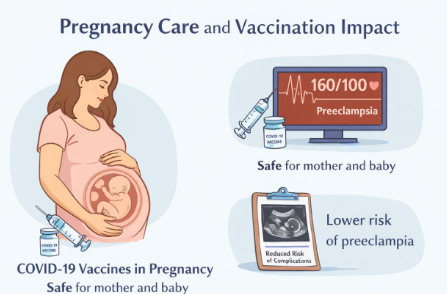
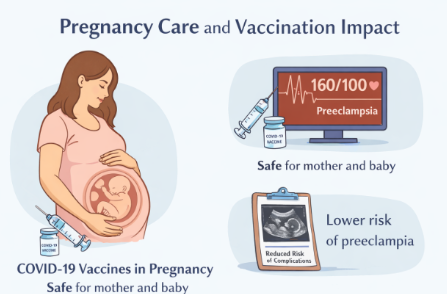
During the pandemic, research quickly established that pregnant individuals faced increased risk from SARS-CoV-2 infection. Pregnant people were more likely to experience severe COVID-19 illness, require intensive care, and face complications such as preterm birth and stillbirth compared to non-pregnant individuals. Vaccination, particularly with mRNA-based COVID-19 vaccines, emerged as a key strategy to reduce these risks without increasing harm to mothers or babies. According to the CDC, studies including more than a million pregnant individuals have found that COVID-19 vaccination before or during pregnancy does not increase the risk of miscarriage, preterm delivery, stillbirth, or birth defects. Instead, vaccination significantly reduces the risk of severe COVID-19 illness and helps build protective antibodies that benefit both mother and infant.
In addition, vaccination during pregnancy has been associated with protection for the infant after birth, a crucial advantage since babies under six months are not eligible for the vaccination themselves. Research published by the CDC shows that maternal vaccination was linked to a markedly lower risk of COVID-19-related hospitalization in infants under six months of age, reinforcing the dual benefit of protecting both the mother and the newborn.
More recent studies suggest that vaccination may even play a role in lowering the risk of preeclampsia, a serious pregnancy complication characterized by high blood pressure and potential organ damage. Research involving thousands of pregnant individuals across multiple countries found that those vaccinated, especially with booster doses, had significantly reduced odds of developing preeclampsia compared to unvaccinated peers. Vaccinated individuals also showed lower rates of maternal and neonatal morbidity and preterm delivery. These findings indicate that vaccination’s protective effects may extend beyond infection prevention alone, potentially influencing broader aspects of maternal health.
Despite strong evidence supporting the safety and benefits of maternal immunization, vaccine hesitancy remains a barrier. Some public discourse and policy shifts have questioned the need for COVID-19 vaccination in pregnant individuals, framing it as optional or unnecessary. Yet, major medical organizations and public health authorities continue to support vaccination based on scientific evidence that favors protection over risk. Transparent communication, shared decision-making between healthcare providers and patients, and ongoing research are essential to build trust and improve vaccination uptake among expectant parents. As healthcare continues to evolve, maternal immunization stands as a powerful example of preventative care with meaningful impact for families.
References:
Centers for Disease Control and Prevention. “COVID-19 Vaccination for Women Who Are Pregnant or Breastfeeding.” CDC, https://www.cdc.gov/covid/vaccines/pregnant-or-breastfeeding.html
INTERCOVID Consortium. “COVID-19 Vaccination Status during Pregnancy and Preeclampsia Risk: The Pandemic-Era Cohort of the INTERCOVID Consortium.” eClinicalMedicine, vol. 52, 2022, COVID-19 vaccination status during pregnancy and preeclampsia risk: the pandemic-era cohort of the INTERCOVID consortium - eClinicalMedicine
Wei, Shu Qin, et al. “SARS-CoV-2 Infection during Pregnancy and Risk of Preeclampsia: A Systematic Review and Meta-Analysis.” American Journal of Obstetrics and Gynecology, vol. 225, no. 1, 2021, pp. 52.e1–52.e15. PubMed Central (PMC), https://www.ncbi.nlm.nih.gov/pmc/articles/PMC7947873