
The Truth Behind BMI
Written By: Ihsaan Alam and Mariam Shahzad
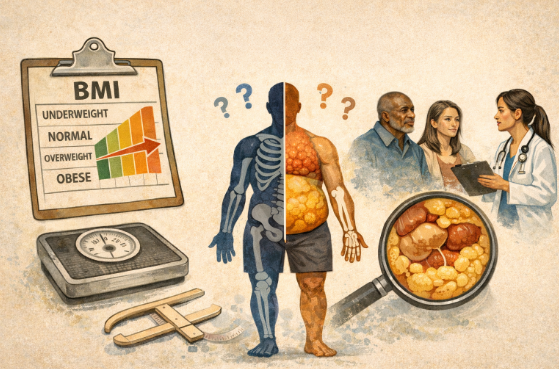
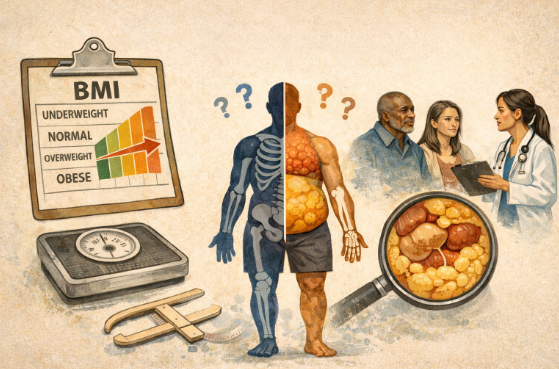
BMI, or body mass index, has become a cultural shorthand for health, even though it was never designed to carry that kind of moral or medical weight. It is a simple ratio of height to weight, valued because it is fast, inexpensive, and easy to standardize. Those traits make BMI useful for public health surveillance and for initial screening in clinical settings. Yet the very simplicity that makes it convenient also makes it incomplete. BMI can suggest where risk may be higher, but it cannot explain why, and it cannot reliably summarize the health of a single individual (“The Science, Strengths, and Limitations of Body Mass Index”).
BMI’s usefulness rests on its ability to capture trends. In large populations, BMI correlates with body fat and with the likelihood of cardiometabolic conditions. For health systems, that matters. Screening tools are meant to be practical, not perfect. They help clinicians decide when to look closer, and they help communities understand broad patterns that shape disease burden. The National Academies workshop summary emphasizes that BMI is associated with body fat and is easy to measure, which supports its role as an accessible assessment tool. At the same time, it underscores a crucial limitation. BMI does not directly measure adiposity, and its relationship to health outcomes varies across individuals and across demographic groups (“The Science, Strengths, and Limitations of Body Mass Index”). That is the central paradox of BMI. It can be informative at scale while still being unreliable as a personal verdict.
The most obvious weakness of BMI is that it cannot distinguish what weight is made of. The formula does not separate muscle, bone, and water from fat. Medical News Today notes that this limitation can lead to misclassification, especially for people with higher lean mass. An athlete or a naturally muscular person may fall into an “overweight” category despite having low body fat and strong fitness (Nordqvist). In these cases, BMI is not simply imprecise. It can actively mislead, because it turns a physiologically healthy body composition into a risk label without context.
A second limitation is that BMI cannot describe where fat is stored. This matters because fat distribution, particularly abdominal or visceral fat, is strongly linked to metabolic risk. Two people can have the same BMI while carrying fat in very different patterns, and those patterns can shape their likelihood of insulin resistance, cardiovascular disease, and other outcomes. Yale Medicine stresses that relying on BMI alone obscures these differences and argues for including measures such as waist circumference to capture risk more accurately (Katella). When BMI is treated as sufficient, it can flatten meaningful clinical variation into a single category.
A third limitation is that BMI does not function uniformly across age, sex, and ethnicity. Body composition changes over the life course, and the relationship between BMI and body fat can differ among populations. Yale Medicine points out that BMI was developed using limited demographic data, which contributes to its uneven accuracy across different groups (Katella). The National Academies workshop summary similarly emphasizes that BMI’s association with health risk is inconsistent and varies by demographic factors (“The Science, Strengths, and Limitations of Body Mass Index”). This variability does not make BMI useless. It makes BMI conditional. The number needs interpretation, not reverence.
These limitations become most consequential when BMI is used as the sole proxy for health. Both Yale Medicine and Medical News Today emphasize the danger of relying on BMI alone, because a person can have a “normal” BMI while still carrying meaningful metabolic risk, and another person can have a higher BMI without the same degree of cardiometabolic dysfunction (Katella; Nordqvist). In practice, the cost of overreliance cuts both ways. It can lead to false reassurance for those within “normal” ranges, and it can lead to oversimplification or stigma for those outside them. Neither outcome supports good care.
Ultimately, the question is not whether BMI should exist. The question is what we ask it to do. Health is multi-dimensional, shaped by physiology, behavior, environment, and time. A single number can contribute to understanding, but it cannot substitute for it. BMI belongs in medicine as a screening tool, not as a definition of a person’s worth or a complete account of their health.
References:
Katella, Kathy. “Why You Shouldn’t Rely on BMI Alone.” Yale Medicine, 4 Aug. 2023, https://www.yalemedicine.org/news/why-you-shouldnt-rely-on-bmi-alone. Accessed 25 Jan. 2026.
Nordqvist, Christian. “Why BMI Is Inaccurate and Misleading.” Medical News Today, updated 20 Jan. 2022, https://www.medicalnewstoday.com/articles/265215. Accessed 25 Jan. 2026.
“The Science, Strengths, and Limitations of Body Mass Index.” Translating Knowledge of Foundational Drivers of Obesity into Practice: Proceedings of a Workshop Series, National Academies of Sciences, Engineering, and Medicine, National Academies Press, 31 July 2023, NCBI Bookshelf, https://www.ncbi.nlm.nih.gov/books/NBK594362/. Accessed 25 Jan. 2026.