
Why You’re Still Tired After 8 Hours of Sleep
Written By: Xavier Oyola and Laila Ibrahim
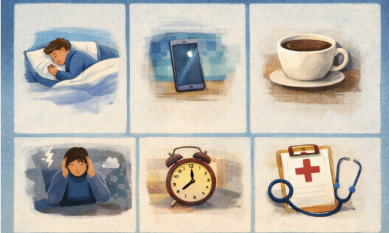
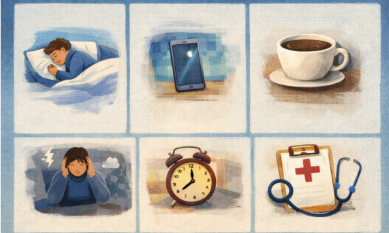
Have you ever gone to bed at a reasonable time and still wake up feeling exhausted? Many people experience this and usually blame it on sleep duration, however, research suggests that although sleep duration matters, factors such as sleep quality, excessive screen time, stress, and caffeine consumption, may also be contributing factors.
Ensuring quality sleep is not just about the number of hours you sleep, but also about the quality of your sleep. There are many factors and habits that may be contributing to poor sleep quality.
Signs of poor sleep quality include:
Trouble falling asleep
Repeatedly waking up during the night
Feeling sleepy or tired even after getting between seven and nine hours of sleep
Another factor that hinders your sleep quality is the duration of screen time. Being on your phone might be an activity you do to unwind after a long day, however, using an electronic device before bed can make it difficult for your brain to “shut off”. This is because screens emit blue light, which hinders the production of melatonin. Research has shown that more than two hours of screen time in the evening can significantly impact melatonin production, which is essential for falling asleep.
Additionally, it is crucial to set aside time to destress before bed. Stress negatively affects sleep because it triggers a heightened state of alertness and anxiety which can lead to insomnia. Many individuals are stressed before going to bed due to overthinking. When going to bed, it is crucial not to think about things that may cause anxiety. These concerns have a significant impact on an individual’s quality of sleep. It is crucial to maintain a good sleep environment and ensure that your mind is at rest before heading to sleep.
Furthermore, it is essential to avoid caffeine for at least six hours before going to bed. Caffeine affects sleep by disrupting the body's pathway that activates a brain chemical that promotes sleepiness. Caffeine also lingers in the body for about three to five hours after consumption. If you tend to enjoy a latte or warming cup of tea with your dinner, and the caffeine is to blame for any difficulties you may have with falling asleep. Switching to decaffeinated versions of this beverage can help ensure you are getting proper sleep.
Ensuring your body gets enough rest is vital to your overall wellbeing. The way you feel the next day is reliant on how well your body rests. While you are asleep, your body works to sustain healthy brain function and maintain your physical and mental health.
Sleep is crucial for children and teens, as it helps support growth and development. Getting inadequate sleep over time can raise your risk for long-term health problems. It can also impact how well you think, react, work, learn, and interact with others. Sleep deprivation can severely impact your circulatory system, metabolism, respiratory system, and immune system.
It has been said that you spend 1/3 of your life sleeping; sleep should be treated as essential as the rest of the core aspects of maintaining one's wellbeing.
References:
Centers for Disease Control and Prevention. (n.d.). About sleep. Centers for Disease Control and Prevention. https://www.cdc.gov/sleep/about/index.html
Drake, C., Roth, T., & Shambroom, T. (2013, November 15). Caffeine effects on sleep taken 0, 3, or 6 hours before going to bed | journal of clinical sleep medicine. Journal of Clinical Sleep Medicine. https://jcsm.aasm.org/doi/10.5664/jcsm.3170
Dusang, K. (2019, May 9). How stress can affect your sleep. Baylor College of Medicine. https://www.bcm.edu/news/how-stress-can-affect-your-sleep
Screens and your sleep: The impact of nighttime use: Sutter Health. The Impact of Nighttime Use | Sutter Health. (2024, September 27). https://www.sutterhealth.org/health/screens-and-your-sleep-the-impact-of-nighttime-use
U.S. Department of Health and Human Services. (2022, March 24). Why is sleep important?. National Heart Lung and Blood Institute. https://www.nhlbi.nih.gov/health/sleep/why-sleep-important