When a Heart Attack Doesn’t Look Like One: Heart Attacks in Women
Written by: Eshrat Quader and Sahannah Seemungal
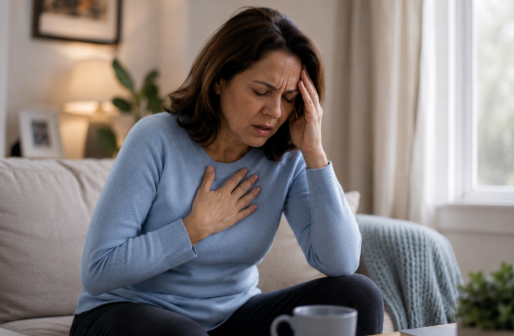
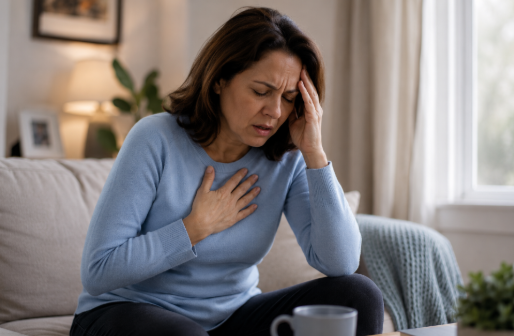
When most people imagine a heart attack, they picture someone suddenly clutching their chest in severe pain. While chest pain is the most common heart attack symptom in both women and men, heart attacks do not always follow this familiar script. Women may experience additional symptoms that are less immediately associated with the heart, making it important to recognize the different ways a heart attack can present.
Heart disease remains the leading cause of death for women in the United States. According to the Centers for Disease Control and Prevention (CDC), more than 60 million American women are living with some form of heart disease. Despite its prevalence, cardiovascular disease can still be underestimated as a health concern for women.
A heart attack occurs when blood flow to part of the heart is reduced or blocked, preventing the heart muscle from receiving enough oxygen. Without prompt treatment, the affected heart tissue can become damaged.
Chest pain, pressure, squeezing, or discomfort remains the most common symptom of a heart attack in women. However, women are more likely than men to experience certain additional symptoms, including shortness of breath, nausea or vomiting, unusual fatigue, weakness, and pain in the back, shoulder, or arm.
The differences are not limited to symptoms. Heart disease itself can sometimes develop differently in women. Traditional coronary artery disease often involves plaque accumulating in the major arteries that supply blood to the heart. Women, however, are more likely than men to develop coronary microvascular disease, which affects the heart's smaller blood vessels. Because these vessels are tiny, problems involving them may not always appear in the same way as blockages in larger coronary arteries.
Women can also experience heart attacks without the severe obstructive coronary artery disease commonly associated with heart attacks. Researchers continue to study how biological factors, hormones, inflammation, and blood vessel function may contribute to differences in cardiovascular disease between women and men.
Because symptoms such as fatigue, nausea, back pain, or shortness of breath can have many causes, they can be easy to dismiss. However, sudden or unexplained symptoms, particularly when several occur together, should be taken seriously.
Recognizing a possible heart attack does not mean assuming that every episode of fatigue or nausea is a cardiovascular emergency. Instead, it means understanding that a heart attack may not always look like the dramatic event portrayed on television.
During a heart attack, every minute without adequate blood flow can mean additional damage to the heart. Rapid treatment can restore circulation, limit permanent injury, and reduce the risk of serious complications. If symptoms suggest a possible heart attack, especially chest discomfort, difficulty breathing, unexplained upper-body pain, severe weakness, or a combination of concerning symptoms, emergency medical attention should be sought immediately. Heart attacks do not have a single appearance. Improving awareness of how cardiovascular disease can present in women can help challenge outdated assumptions, encourage earlier recognition of warning signs, and ultimately help women receive potentially lifesaving care sooner.
References:
American Heart Association. “Heart Attack Symptoms in Women.” American Heart Association, 13 Dec. 2024, www.heart.org/en/health-topics/heart-attack/warning-signs-of-a-heart-attack/heart-attack-symptoms-in-women.
National Heart, Lung, and Blood Institute. “Coronary Heart Disease: Women and Heart Disease.” National Heart, Lung, and Blood Institute, 27 Dec. 2024, www.nhlbi.nih.gov/health/coronary-heart-disease/women.
Centers for Disease Control and Prevention. “About Women and Heart Disease.” Centers for Disease Control and Prevention, 15 May 2024, www.cdc.gov/heart-disease/about/women-and-heart-disease.html