Beyond Muscle Building: What Can Creatine Do for Your Brain?
Written By: Kamil Ignacio and Laila Ibrahim
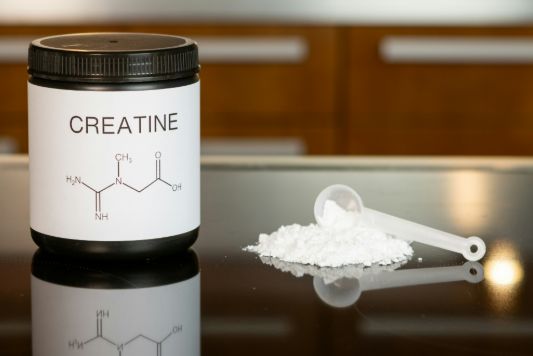
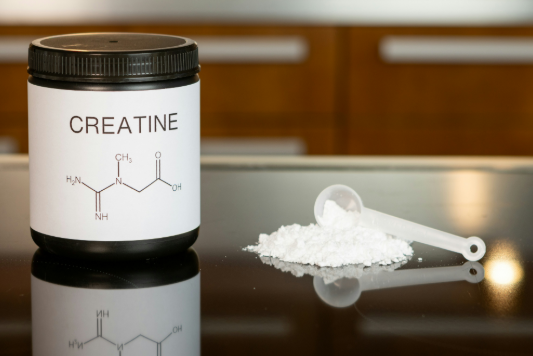
For decades, creatine monohydrate has been marketed almost exclusively as a muscle-building supplement that gym-goers scoop into a shaker bottle. While this organic compound comes in the form of a white powder or pill, it isn’t a foreign substance made solely in the lab: your body actually produces it naturally. Your liver, pancreas, and kidneys synthesize creatine from three amino acids in small amounts, but creatine stores are also derived from diet in the form of red meat and fish. Around 95% of the body’s creatine is kept in skeletal muscle, where it helps regenerate adenosine triphosphate (ATP), which is the molecule cells depend on for bursts of energy. Given this information, it is no surprise that creatine has been drawn upon for physical performance improvement, but it poses a question of what it can be doing for arguably the most complex organ: our brains?
Like muscle, the brain is metabolically costly to expend, and they depend on the same phosphocreatine energy system. While most research is dedicated to studying creatine’s effects and potential on muscle, there is a smaller yet increasing body of creatine research focused on the brain. Initial studies indicated that a combination of creatine supplementation and a related compound named guanidinoacetic acid (GAA) can increase creatine content in the human brain (Forbes et al., 2022). Given that creatine stores in the brain may be elevated, does this translate into any measurable benefit in the form of cognition?
Evidence suggests the answer is more complicated than straightforward, and yet it is promising. Published in the Oxford Academic’s Nutrition Reviews Journal, a 2023 systematic review and meta-analysis utilized randomized controlled trials to determine the effects of creatine supplementation on memory performance in humans. Overall, creatine supplementation improved measures of memory compared to placebo, but interestingly enough, older participants (66-76 years old) performed better than younger participants (11-31 years old) (Prokopidis et al., 2023). A possible explanation is that the brain’s creatine stores may decline with age, leaving more room for supplementation to make a difference, while younger brains may be close to their creatine capacity.
Research also suggests that creatine may ease symptoms of concussion and mild traumatic brain injury, as supplementation may combat hypometabolism following these scenarios (Forbes et al. 2022). Further, this study also suggested that creatine may help mitigate sleep deprivation, as deprivation strains energy reserves, and creatine helps replenish exactly this reserve. However, creatine appears to have a limited clinical effect on the management of neurodegenerative diseases such as Parkinson’s and Huntington’s disease, suggesting that creatine supplementation has its nuances across conditions.
It is also important to note that certain groups may benefit more from creatine supplementation than others. Women tend to have lower baseline intramuscular creatine levels than men; thus, supplementation may ease fatigue tied to phases of the menstrual cycle. In addition, since creatine stores are derived from animal products, research suggests supplementation in vegans and vegetarians can improve physical and cognitive performance while adhering to a diet (Gutiérrez-Hellín et al., 2024).
Despite the promising body of emerging research, creatine should not be treated as a guaranteed cognitive enhancer. It is important to note that this research is still limited, study designs vary in duration, and the strongest effects have been observed in certain groups such as older adults, those under sleep deprivation, or those recovering from a brain injury, rather than a “one size fits all” approach. Future studies are still required to determine the effects of long term creatine supplementation on brain function and health before creatine earns a spot on the shelf as a legitimate brain health supplement and not just a gym staple.
Nonetheless, the underlying logic and results of current studies are hard to dismiss and show great promise for future research. Muscle and the brain both utilize phosphocreatine to regenerate valuable energy stores; thus there is a biological reason to believe that creatine supplementation may lead to a measurable cognition benefit. Though its reputation started in the gym, creatine may soon be earning a second one as a supplement that helps the mind keep up with the body.
References:
Forbes, Scott C., et al. “Effects of Creatine Supplementation on Brain Function and Health.” Nutrients, vol. 14, no. 5, Feb. 2022, p. 921. PubMed Central, https://doi.org/10.3390/nu14050921.
Gutiérrez-Hellín, Jorge, et al. “Creatine Supplementation Beyond Athletics: Benefits of Different Types of Creatine for Women, Vegans, and Clinical Populations-A Narrative Review.” Nutrients, vol. 17, no. 1, Dec. 2024, p. 95. PubMed, https://doi.org/10.3390/nu17010095.
Prokopidis, Konstantinos, et al. “Effects of Creatine Supplementation on Memory in Healthy Individuals: A Systematic Review and Meta-Analysis of Randomized Controlled Trials.” Nutrition Reviews, vol. 81, no. 4, Mar. 2023, pp. 416–27. DOI.org (Crossref), https://doi.org/10.1093/nutrit/nuac064.