
From Farm to Table: Understanding the Cyclospora Outbreak
Written By: Rachel Levin and Eshrat Quader
Have you heard about a parasite in fruits and vegetables? Commonly referred to as Cyclospora, cyclosporiasis is an illness caused by the parasite Cyclospora cayetanensis (Centers for Disease Control and Prevention). From May 1, 2026, to August 18, 2026, there have been over 15,700 confirmed cases of Cyclospora across 47 states. Additionally, over 800 people have been hospitalized, and 2 have passed away from infections since May 1, 2026 (Centers for Disease Control and Prevention). Why are there so many cases suddenly, and what can people do to prevent infection?
This year’s multistate outbreak has been linked to contaminated iceberg lettuce from Mexico, supplied by Taylor Fresh Foods, leading to a nationwide recall of these products, which have appeared in Walmart and Taco Bell (Walrath-Holdridge). State-by-state data has been varying, with Michigan being the hardest-hit state with 335 hospitalizations, 2 deaths, and over 14,200 cases since May 1. Only 3 states have had zero cases since the beginning of May: New Mexico, Montana, and Hawaii (Walrath-Holdridge).
In the US, cyclosporiasis commonly affects individuals during the warmer months, with past outbreaks being linked to contaminated romaine lettuce, raspberries, and fresh herbs like basil and cilantro (Linder and Malani). Cyclosporiasis affects the small intestine, and people can become infected by consuming food or water contaminated with fecal particles from an infected person. The parasite can get into produce if it is grown in soil or washed with water contaminated with such feces. Notably, the parasite cannot spread through person-to-person contact (Linder and Malani).
It can take 2 to 14 days after initial exposure for signs of illness to appear (U.S. Food and Drug Administration). These signs also include low-grade fever, vomiting, body aches, and other flu-like symptoms, as well as bloating and increased flatulence. Anyone is susceptible to becoming infected, but those with weakened immune systems, such as those on immunosuppressive medications or living with HIV, children, and the elderly can experience more severe illness or even complications from dehydration. This parasite is treatable with proper antibiotics, so if you exhibit signs of infection, seek proper care from a healthcare provider (U.S. Food and Drug Administration).
Healthcare providers can diagnose cyclosporiasis through specific stool tests (Linder and Malani). Laboratories can use microscopic examination or a laboratory technique called polymerase chain reaction (PCR) to detect C. cayetanensis DNA. Routine stool tests may not automatically test for Cyclospora, so patients should discuss possible exposure with their healthcare provider (Linder and Malani).
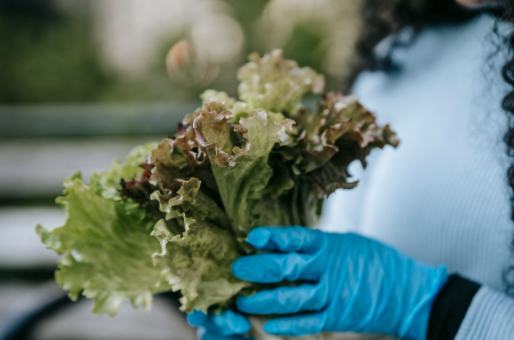
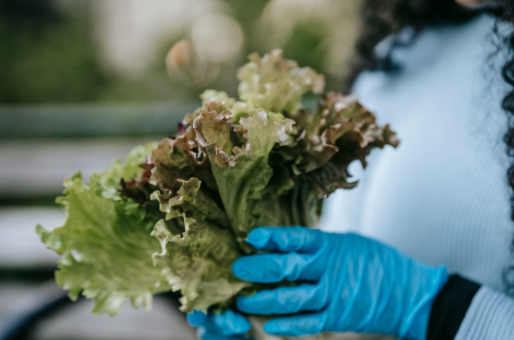
There are ways to prevent infection. If you would like to continue consuming produce but worry about infection, the FDA advises cooking the produce to at least 158 degrees Fahrenheit (U.S. Food and Drug Administration) Also, wash your hands with soap and hot water before and after handling raw produce. Scrub all vegetables and fruits with a produce brush under clean running water. If you decide to eat lettuce, choose a whole head over bagged salad to reduce risk. You can also remove the outer layers of leaves or peel the skin off if possible (U.S. Food and Drug Administration).
Some fruits and vegetables are lower risk since they are less likely to be contaminated and have not been linked to prior outbreaks (U.S. Food and Drug Administration). This includes cooked fruits and vegetables, commercially blanched and frozen produce, produce with a removable peel, produce with a thick, smooth surface, and canned fruits and vegetables (U.S. Food and Drug Administration).
Cyclosporiasis cases have been slowing down, but the outbreaks are not over. Four of the seven Cyclospora outbreaks under investigation by the FDA are still ongoing (Walrath-Holdridge). In the US, cyclosporiasis season typically lasts from May through the end of August, but cases could continue to rise later than usual this year with the volume of cases (Walrath-Holdridge). Staying informed about recalls, handling produce carefully, and seeking medical care for symptoms can reduce the risk of serious illness.
References:
Centers for Disease Control and Prevention. “Surveillance of Cyclosporiasis.” CDC, 18 Aug. 2026, www.cdc.gov/cyclosporiasis/php/surveillance/index.html. Accessed 19 Aug. 2026.
Linder, Kathleen A., and Preeti N. Malani. “What Is Cyclosporiasis?” JAMA, 21 July 2026, doi.org/10.1001/jama.2026.14866. Accessed 22 Aug. 2026
U.S. Food and Drug Administration. “Cyclospora.” FDA, www.fda.gov/food/foodborne-pathogens/cyclospora. Accessed 25 Aug. 2026.
Walrath-Holdridge, Mary. “Is Lettuce Safe to Eat Now? What to Know amid Cyclospora Outbreak.” TODAY, Aug. 2026, www.today.com/health/news/cyclospora-outbreak-over-yet-lettuce-safe-cases-down-symptoms-rcna593314. Accessed 23 Aug. 2026