
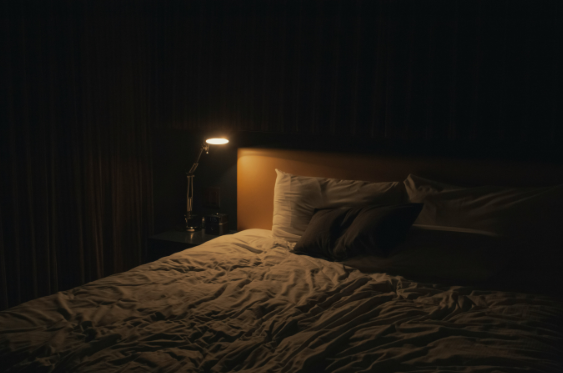
The Night Shift Within the Skull: How Sleep May Help the Brain Clear Its Waste
Written By: Ihsaan Alam and Kamil Ignacio
The human brain, though only a small fraction of the body’s mass, is metabolically costly. Its billions of cells continually consume energy, exchange chemical signals, and generate molecular by-products. Elsewhere in the body, the lymphatic system helps collect excess fluid and cellular waste. Brain tissue, however, contains no conventional lymphatic vessels. How, then, does this densely packed organ dispose of its refuse?
One influential answer is the glymphatic system—a fluid-transport pathway whose name combines “glial,” referring to the brain’s support cells, with “lymphatic.” The concept is both elegant and medically consequential: cerebrospinal fluid appears to travel through spaces surrounding blood vessels, exchange with fluid between brain cells, and carry dissolved waste away from neural tissue. Evidence also suggests that this process changes with sleep. Yet the glymphatic system should not be imagined as a set of anatomical pipes newly discovered inside the brain. It is better understood as a working model of microscopic fluid movement—one that is strongly supported in animals but remains technically difficult to measure in living humans.
A Hidden Circulation
The modern glymphatic hypothesis emerged from experiments led by neuroscientist Jeffrey Iliff. Using fluorescent tracers and two-photon microscopy in living mice, the researchers observed cerebrospinal fluid entering brain tissue along spaces surrounding arteries. Fluid and dissolved substances then moved toward pathways associated with veins. Astrocytes—the star-shaped glial cells that envelop much of the brain’s vasculature—appeared central to this exchange. Their end-feet contain abundant aquaporin-4, a protein channel that permits water to cross cell membranes. When aquaporin-4 was absent, both fluid movement and the clearance of amyloid-beta were substantially reduced (Iliff et al., 2012).
Amyloid-beta is especially important because abnormal accumulations of this protein are a defining feature of Alzheimer’s disease. The experiment did not establish that impaired glymphatic transport causes Alzheimer’s in humans. It did, however, reveal a plausible route through which the brain may regulate molecules capable of becoming toxic when they accumulate. The discovery reframed brain maintenance as a dynamic process involving not only neurons and blood vessels, but also glial cells and cerebrospinal fluid.
Why Sleep May Be a Biological Cleaning Cycle
The connection to sleep became clearer in a subsequent study by Lulu Xie and colleagues. Comparing awake, sleeping, and anesthetized mice, the investigators found that the interstitial space—the microscopic area between brain cells—expanded by approximately 60 percent during sleep or anesthesia. This expansion was associated with greater exchange between cerebrospinal and interstitial fluid and faster removal of amyloid-beta from the brain (Xie et al., 2013).
One useful analogy is a crowded city at night. During waking hours, neural circuits are intensely active, much as streets are congested during the day. In sleep, changes in cellular volume and brain state may create more room for fluid to circulate. The analogy is imperfect: the brain is not literally “washed,” and sleep performs numerous indispensable functions beyond waste clearance, including memory consolidation, metabolic regulation, and immune coordination.
Nevertheless, the findings suggest that sleep is not simply a suspension of activity. It is a distinct physiological state in which essential maintenance may become more efficient.
This possibility gives chronic sleep disruption medical significance beyond next-day fatigue. If sleep repeatedly provides favorable conditions for solute removal, then years of fragmented or insufficient sleep could plausibly burden the brain’s maintenance systems. That proposition is biologically credible, but it is not yet proof that an extra hour of sleep will directly remove amyloid or prevent dementia. Public discussion often outruns the evidence at precisely this point.
From Mice to Human Brains
Human evidence is more limited because the most direct animal experiments require procedures unsuitable for healthy volunteers. Still, magnetic resonance imaging has offered a partial view. In one study of 19 individuals undergoing evaluation for cerebrospinal-fluid disorders, researchers introduced a contrast tracer into the fluid surrounding the spinal cord and followed it with repeated MRI scans. The tracer appeared first in cerebrospinal fluid, later within several brain regions, and subsequently in cervical lymph nodes in the neck. The timing was consistent with movement from cerebrospinal fluid through brain tissue toward extracranial lymphatic drainage (Eide et al., 2018).
The study is striking, but its boundaries matter. It involved a small clinical sample rather than a representative group of healthy adults, and the tracer procedure was invasive. Moreover, visualizing fluid movement does not fully resolve whether transport occurs principally through bulk flow, diffusion, or a combination of mechanisms. “Glymphatic function” is therefore not yet a routine clinical measurement, and no approved supplement, device, sleeping position, or cleansing regimen has been shown to detoxify the brain through this pathway.
The most defensible practical conclusion is also the least sensational: sleep is a biological necessity, not an expendable interval. Glymphatic research supplies a fascinating possible reason, but it should reinforce—not replace—established sleep medicine. Regular sleep schedules, treatment of obstructive sleep apnea, and attention to persistent insomnia are supported by broader clinical evidence, whereas commercial promises to “activate” brain drainage are not.
The glymphatic system has altered how scientists conceive the sleeping brain: not dormant, but engaged in a quieter form of labor. Its channels remain under investigation, its clinical importance is not fully settled, and its therapeutic potential is still prospective. Even so, the idea carries a profound lesson. Consciousness may recede each night not because the brain has ceased working, but because some of its most essential work requires silence.
References
Eide, Per Kristian, et al. “Magnetic Resonance Imaging Provides Evidence of Glymphatic Drainage from Human Brain to Cervical Lymph Nodes.” Scientific Reports, vol. 8, no. 1, 2018, article 7194. https://doi.org/10.1038/s41598-018-25666-4.
Iliff, Jeffrey J., et al. “A Paravascular Pathway Facilitates CSF Flow through the Brain Parenchyma and the Clearance of Interstitial Solutes, Including Amyloid β.” Science Translational Medicine, vol. 4, no. 147, 2012, article 147ra111. https://doi.org/10.1126/scitranslmed.3003748.
Xie, Lulu, et al. “Sleep Drives Metabolite Clearance from the Adult Brain.” Science, vol. 342, no. 6156, 2013, pp. 373–77. https://doi.org/10.1126/science.1241224.